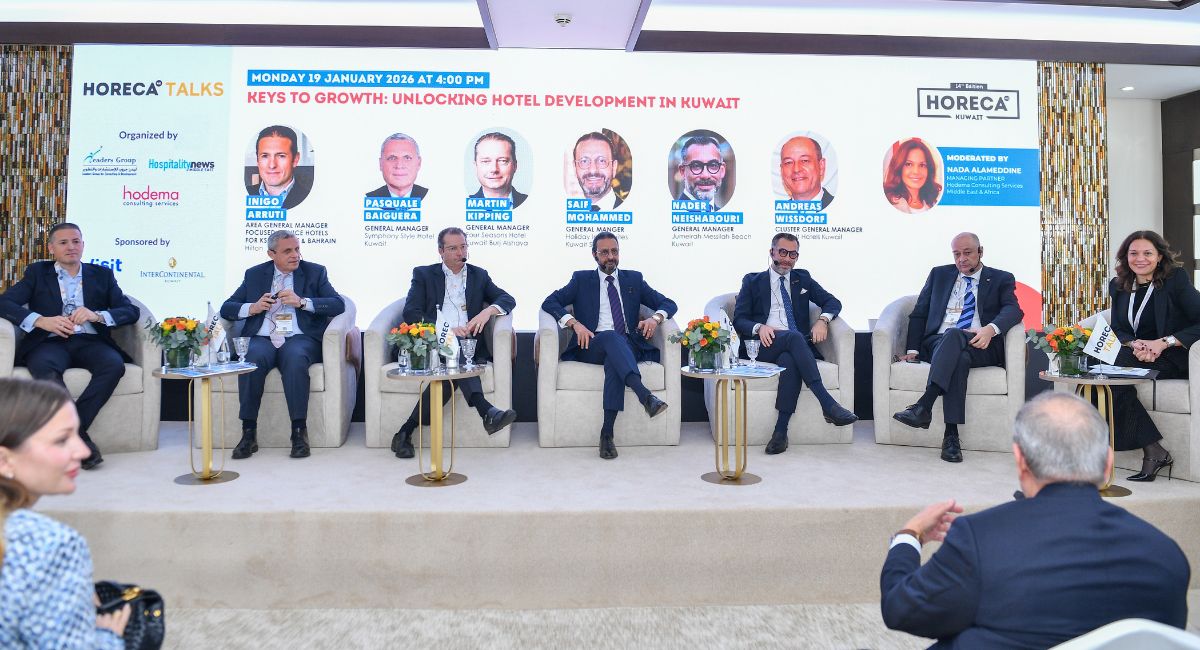
Kuwait’s hotel sector is entering a new era, reshaped by evolving guest expectations, market diversification and strategic repositioning across brands and segments.
With insights from senior hotel executives, we explore how the industry is navigating a changing market and preparing for the future.
Market momentum and diversification
The hotel sector delivered a strong performance in 2025, with meaningful gains in both occupancy and average daily rate. Data showed occupancy rose from 30 percent to 48 percent year-over-year, while rates climbed 16 percent. “The entire market was at 30 percent occupancy in 2024,” noted Saif Mohammed, general manager of Holiday Inn & Suites Kuwait – Salmiya. “Now we’re talking about 48 to 49 percent.”
Broad-based expansion
Notably, this growth occurred despite significant new supply entering the market. Industry leaders attribute the positive trajectory to several factors, including improved visa accessibility and growing regional interest.
Corporate segments form the core of hotel demand, though leisure travel is gaining ground. Saudi visitors represent a substantial share of regional tourism, drawn by Kuwait’s shops and cultural experiences.
High-profile sports events have emerged as a particularly significant driver. Íñigo Arruti, area general manager for mid-market hotels at Hilton covering Saudi Arabia, Kuwait and Bahrain, highlighted a key catalyst. “We had the GCC Cup in 2024, and I think that event put Kuwait on the map,” he said.
F&B as differentiator
In positive news, the growth trajectory has extended into 2026. However, competition is also increasing. As a result, hotels are refining their brand positioning, core differentiators and operational models.
Food and beverage strategy has emerged as a particularly critical arena for differentiation. Catering operations have proven especially successful for hotel properties, becoming a major revenue driver. “Catering is typically the most profitable partner in a hotel. So I think this is where our forte lies,” said Andreas Wissdorf, cluster general manager, Marriott Hotels Kuwait.
Restaurant partnerships are increasingly common, allowing properties to streamline their F&B operations while focusing resources on core hospitality strengths.
Technology adoption
Technology represents another critical area of transformation. Hotels are increasingly deploying digital tools, transforming approaches to key operations such as revenue management, guest communications and forecasting. However, hoteliers remain cautious about replacing personal interactions with automation.
Pasquale Baiguera, general manager of Symphony Style Hotel Kuwait, shared his thoughts on the need for a balanced approach. “I don’t see AI cooking a great signature dish or cleaning a room perfectly,” he said. “However, it’s here to stay, and we have to embrace that technology.”
Talent development and retention
Among the sector’s key challenges, talent acquisition and retention remain especially significant across all hotel segments. Business leaders point to a persistent misconception that has proven difficult to dispel. Specifically, hotel roles tend to be viewed as short-term positions rather than career destinations, discouraging talented candidates from applying.
“The lack of understanding that the hotel job can be a permanent career path is the root cause,” said Nader Neishabouri, general manager of Jumeirah Messilah Beach – Kuwait. “Unless we tackle that, we’re always going to have this challenge.”
Properties are addressing these pressures through university partnerships, internship programs and leadership development initiatives. However, hoteliers point out that ongoing training and development are equally critical to retention.
Efficiency and sustainability
Operational costs present another challenge for the industry, sharpening the focus on efficiency. Sustainability has also gained prominence as both an environmental responsibility and a strategic priority. Hotels are implementing initiatives ranging from water filtration systems to eliminating single-use plastics. Additionally, they are prioritizing energy management and responsible procurement.
Significantly, operators emphasize that the real value extends well beyond operational savings or industry recognition. “It’s not about the accolades,” noted Martin Kipping, general manager of Four Seasons Hotel Kuwait at Burj Alshaya. “It’s the educational aspect for employees. Everyone takes this information home and applies it in their private life.”
This reflects a broader shift toward embedding sustainability as shared culture rather than standalone compliance.
Looking ahead
Despite these operational and workforce pressures, industry leaders remain cautiously optimistic about Kuwait’s hotel sector. Several properties have announced renovation projects, reflecting confidence in long-term demand.
Industry leaders agree that future growth will depend on continued collaboration between investors, operators and government stakeholders, alongside clear understanding of evolving market dynamics.
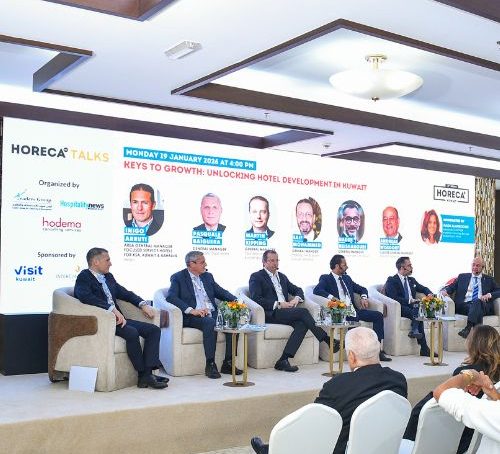
Insights from HORECA Talks at HORECA Kuwait 2026, co-organized by Hospitality News Middle East and Hodema Consulting Services. Session moderated by Nada Alameddine, managing partner at Hodema Consulting Services Middle East & Africa.