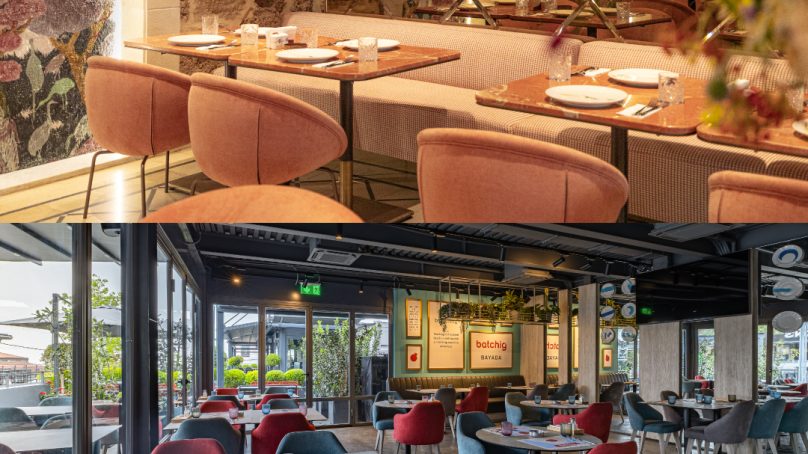
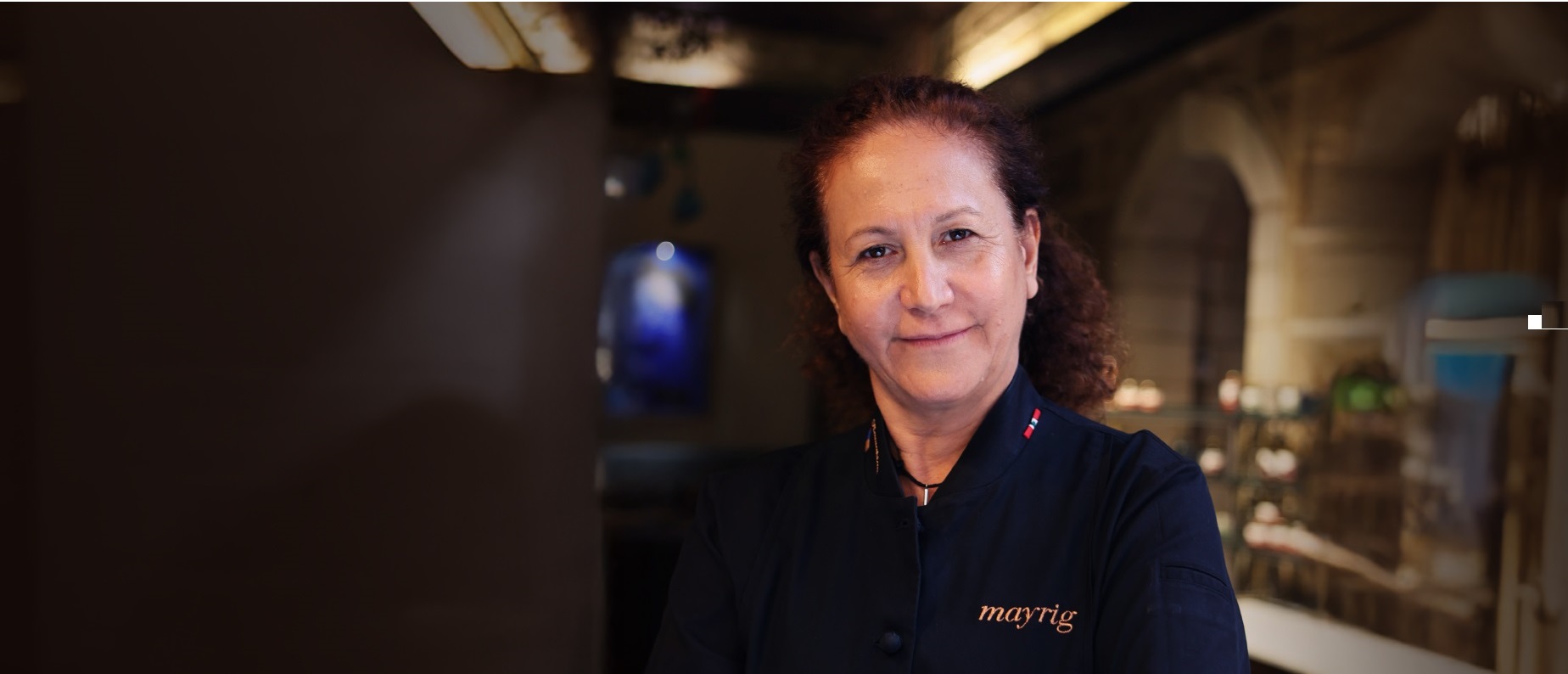
Growing up, our home was always full. My father loved gathering people around the table, and my mother would prepare generous Armenian meals from recipes rooted in heritage. Before he passed away, he carried one simple but powerful dream: to open a place that would introduce Armenian culinary heritage to as many people as possible. That dream stayed with me. In 2003, I turned it into reality. Mayrig was born not just as a restaurant, but as a tribute to family, memory and culture. And while it has grown into an international brand across multiple countries, it has always stayed true to its roots.
Armenian cuisine’s appeal
Mayrig has resonated with people because it is honest. Armenian cuisine is deeply generous, comforting and story-driven. What we did was present it with clarity and respect—familiar enough to feel comforting, yet distinctive and new. Every dish has a reason to exist, every recipe carries a memory and every space feels like a home rather than a concept. That allows people from Beirut and Riyadh to Yerevan and Geneva to emotionally connect, even if it is their first encounter with Armenian food. At its core, Mayrig isn’t about nationality. It’s about belonging. And that’s a language that travels very well.
Export growth without compromise
The biggest challenge wasn’t taking Armenian cuisine abroad; it was protecting it from dilution. There’s constant pressure internationally to simplify flavors or localize too much. For us, authenticity was never negotiable. Core recipes, techniques and flavors don’t change, though service flow and certain operational elements can adapt. Heritage only survives when it’s respected daily. Scale was the other challenge. Armenian cuisine is precise and labor-intensive, so growing responsibly meant choosing partners carefully, expanding slowly and accepting that not every opportunity was the right one. Platforms like Ataya, an exhibition we attended in January, reinforce that conviction. Here, culture, sustainability and responsible growth intersect, which is exactly the kind of space Mayrig stands for. Meaningful brands don’t grow in isolation; they grow by standing in spaces that reflect their values.
Gault & Millau recognition
The recognition from Gault & Millau in Geneva meant a lot, but not because of the restaurant guide’s rating itself. For me, it was confirmation that Armenian gastronomy could stand confidently alongside long-established culinary traditions, without compromise, without reinterpretation and without needing validation through fusion. A cuisine once cooked quietly at home, passed from mother to daughter, evaluated on its own merit in one of the world’s most demanding food cities. Armenian cuisine isn’t niche, nostalgic or limited to diaspora spaces. It belongs in the contemporary culinary conversation, refined, relevant and respected.
Food as service
Working with World Central Kitchen felt instinctive, not like stepping beyond hospitality, but returning to its core. Food has always been about care and dignity, long before it was about restaurants or recognition. When crisis hits, those values don’t disappear; they become urgent. Receiving the Sheikh Zayed Award on behalf of World Central Kitchen was deeply humbling. It represented the meeting point of two worlds—hospitality as service and craft as responsibility. It was also a reminder that food, when used with intention, has the power to restore humanity where it’s most fragile.
A surprise for Lebanon
Our focus has always been on meaningful and strategic growth rather than rapid expansion. New Mayrig openings will continue in markets that already understand and appreciate our philosophy. Each new location is approached with the same discipline. As for Lebanon, it remains home—always. We are working on something special. This project is meaningful, timely and very close to my heart. I can’t reveal much yet. However, I can say that it’s a surprise rooted in gratitude, continuity and our belief in Lebanon.


About author

Rita Ghantous
Rita Ghantous is a hospitality aficionado and a passionate writer with over 9 years’ experience in journalism and 5 years experience in the hospitality sector. Her passion for the performance arts and writing, started early. At 10 years old she was praised for her solo performance of the Beatles song “All My Love” accompanied by a guitarist, and was approached by a French talent scout during her school play. However, her love for writing was stronger. Fresh out of school, she became a freelance journalist for Noun Magazine and was awarded the Silver Award Cup for Outstanding Poetry, by The International Library of Poetry (Washington DC). She studied Business Management and earned a Masters degree from Saint Joseph University (USJ), her thesis was published in the Proche-Orient, Études en Management book. She then pursued a career in the hospitality industry but didn’t give up writing, that is why she launched the Four Points by Sheraton Le Verdun Newsletter. Her love for the industry and journalism led her to Hospitality Services - the organizers of the HORECA trade show in Lebanon, Saudi Arabia, Kuwait and Jordan, as well as Salon Du Chocolat, Beirut Cooking Festival, Whisky Live and other regional shows. She is currently the Publications Executive of Hospitality News Middle East, Taste & Flavors and Lebanon Traveler. It is with ultimate devotion for her magazines that she demonstrates her hospitality savoir-faire.