Saudi Arabia’s food and beverage sector is developing at remarkable speed, driven forward by a young population keen to explore new and revisited gastronomic trends. Chefs and restaurateurs are stepping up to meet these demands, bringing new vibrancy and diversity to the sector. With input from industry experts, we explore how the kingdom’s culinary identity is coming into its own.
Reflecting national growth trends, Riyadh, Saudi Arabia’s capital, is emerging as one of the most dynamic global culinary markets. New and diverse concepts are opening to meet the demands of a young and curious population. Meanwhile, large-scale industry attractions are positioning the kingdom as a regional culinary hub. Indeed, events such as HORECA Riyadh and Salon du Chocolat et de la Pâtisserie Riyadh are spotlighting both local talent and international expertise.
“It’s a booming industry. You can see flavors from all over the world being tried and tasted in Saudi Arabia and in Riyadh in particular,” noted Majed AlMuhanna, cultural heritage and intangible heritage expert.
The rise of local brands
Homegrown concepts are gaining significant ground, particularly in the cafe and casual dining sectors. According to Sohyb Ahmed Alblushi, CEO of Half Million, Saudi Arabia is home to more than 72,000 restaurants and cafés. Notably, coffee shops represent a rapidly growing share. Significantly, nearly 70 percent of coffee shops are local, which is in stark contrast to other GCC markets. Industry representatives cite local knowledge as a key reason for this achievement. This includes an in-depth understanding of Saudi lifestyle patterns, such as social and cultural rhythms shaping dining habits.
“For sure, I’d say the homegrown brand understands the markets in a different way,” Alblushi said. “They serve the needs of the customer.”
International challenges
At the same time, global brands continue to thrive in the kingdom’s vibrant market. However, many face specific challenges in their operations. These include finding a balance between preserving brand DNA and adapting to local culture.
Moreover, Saudi Arabia’s youth are keenly attuned to global culinary developments, which poses an added challenge for restaurateurs.
“You must respect the culture, understand the palate,” said Aline Kamakian, chef, founder and CEO of Mayrig Restaurant. “At the same time, you need to move at the same pace as the young generation, because trends change extremely quickly.”
Heritage revisited
While diners are keen to try Saudi Arabia’s latest concepts, there is also a growing focus on its culinary past.
Experts acknowledge that local cuisine has a rich heritage. However, it has historically remained underrepresented in commercial food settings. Fortunately, these regionally distinct, traditional flavors are now being reintroduced through institutional support aligned with Vision 2030.
“The authentic, traditional ingredients and traditional dishes are being presented as they are. Then you have the evolved and modern,” explained AlMuhanna. “There is also the fusion aspect. All of these attributes are part of the Saudi homegrown culinary art.”
Innovation in operations
Innovation is also extending beyond menus and into the operational side of the local dining scene. Technology and sustainability are increasingly embedded across the sector, from mobile apps driving sales to zero-waste restaurant models. These developments support operational efficiency while meeting consumer expectations around environmental responsibility.
Additionally, the introduction of guides like Gault & Millau reflects growing culinary sophistication. In turn, they support a collective drive to raise standards across the sector. Service and staffing remain key areas for improvement. However, the industry is increasingly focused on addressing these challenges collectively. “Every restaurateur feels they have to improve,” said Zeina Dammous, project manager at Gault & Millau KSA. She also noted that the culinary arts commission is actively working to elevate standards region-wide.
Opportunities ahead
As the kingdom’s culinary scene continues to mature, significant opportunities for growth remain. Championing local cuisine is one priority, while affordable health-conscious dining concepts represent another, driven by rising wellness awareness.
With Vision 2030 continuing to unlock opportunities, Saudi Arabia’s culinary scene looks set for further success.
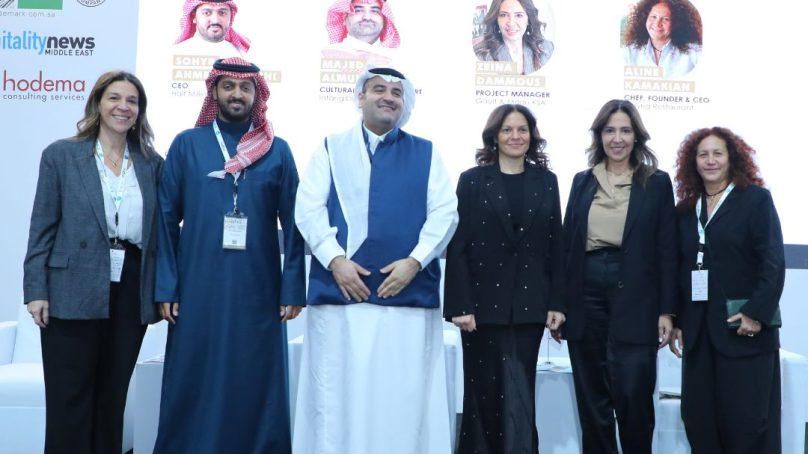
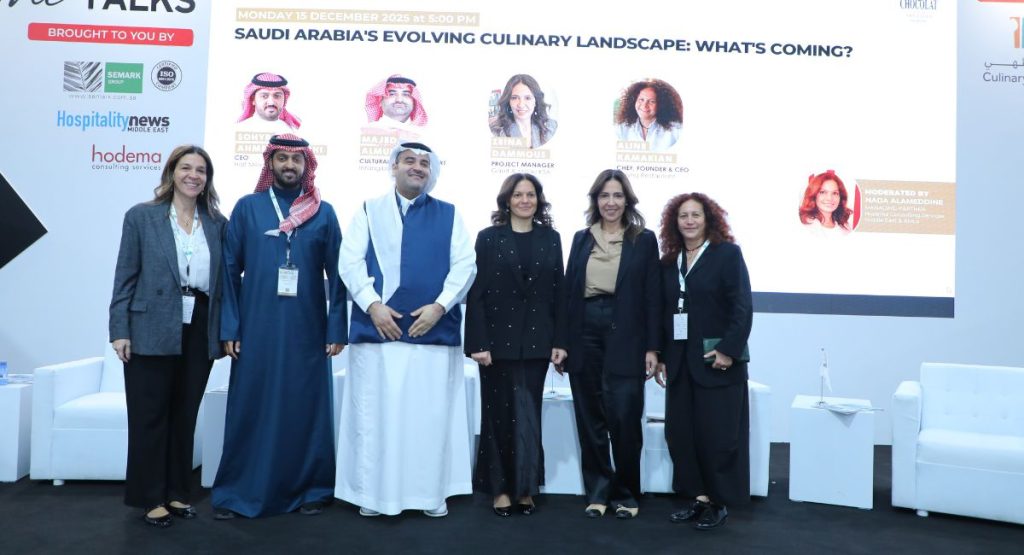
Insights from HORECA Talks at HORECA Riyadh 2025, co-organized by Semark, Hospitality News Middle East and Hodema Middle East and Africa. Session moderated by Nada Alameddine, managing partner at Hodema Consulting Services Middle East & Africa.