As Saudi Arabia’s hospitality sector expands at record pace, the focus is shifting beyond destinations and infrastructure. At the heart of the kingdom’s tourism ambitions lies a clear priority: developing people.
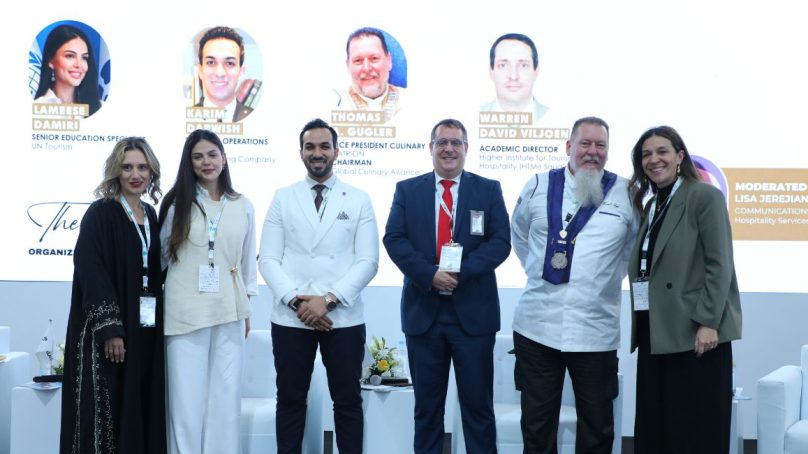
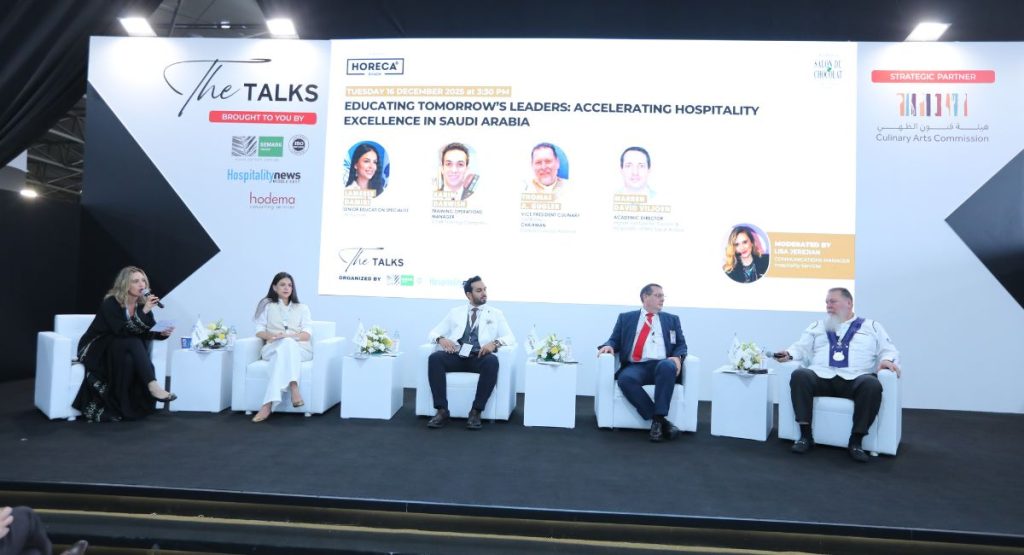
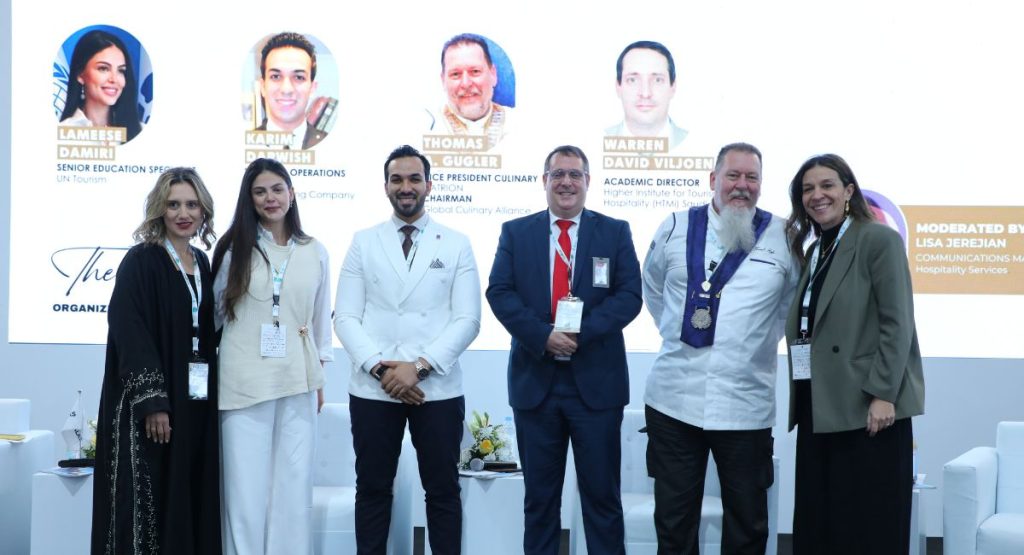
A recent industry discussion at HORECA Riyadh brought together key voices from education, including Lameese Damiri, senior specialist for education at UN Tourism; Karim Darwish, training operations manager at STTAR Training Company; Warren David Viljoen, academic director at HTMi Saudi Arabia; and Thomas A. Gugler, vice president of culinary at CATRION and chairman of the Global Culinary Alliance. Moderated by Lisa Jerejian, communications manager at Hospitality Services, the panel examined how education, technology and collaboration are shaping the next generation of hospitality professionals in the kingdom.
Vision 2030 and a people-first approach
Saudi Arabia’s Vision 2030 places human capital at the core of national development, positioning people as the driving force behind long-term economic and social progress. Within this framework, education is not treated as an isolated pillar but as a catalyst for sustainable growth. For UN Tourism, learning is most effective when it integrates academic knowledge with real-world application. As a result, hybrid learning models have become increasingly central, combining strong theoretical foundations with hands-on experience. This approach exposes students to global standards while keeping them firmly rooted in local projects and realities. By maintaining this balance, education remains both internationally relevant and locally meaningful, directly supporting the kingdom’s rapidly expanding tourism ecosystem. Graduates enter the market equipped with practical skills, professional confidence and a clear understanding of industry expectations.
Aligning training with industry needs
Turning Vision 2030 ambitions into tangible outcomes requires close alignment between education and labor market demand. Training providers play a critical role in this process by translating national goals into actionable workforce strategies. STTAR Training Company, for example, views national transformation as a roadmap for skills development, guiding the creation of programs that respond directly to market needs. Through partnerships with both public and private stakeholders, training initiatives help bridge gaps between education and employment. They also ensure that international hospitality standards are thoughtfully adapted to the Saudi context. Panelists emphasized that collaboration remains essential, as sustainable growth depends on shared responsibility among educators, employers and policymakers alike.
Academic frameworks supporting local talent
Academic institutions are evolving in parallel with the needs of the industry. At HTMi Saudi Arabia, the focus is firmly on developing Saudi nationals through education that is closely aligned with hospitality sector requirements. Programs increasingly benchmark against international qualification frameworks, enabling graduates to transition confidently into both local and global professional environments. This shift reflects Saudi Arabia’s broader commitment to quality assurance and educational excellence. Vocational education, once undervalued, is now gaining recognition as a vital pathway to professional success, particularly in service-oriented industries where practical competence is paramount.
Culinary arts and inspiring future professionals
Culinary education adds a distinctive and powerful dimension to workforce development. Beyond technical skills, it fosters creativity, cultural expression and a sense of purpose. Attracting young Saudis to the culinary profession requires a shift in perception, supported by mentorship, competitions and opportunities for innovation. When aspiring professionals see clear pathways for growth and advancement, engagement follows naturally. Food is deeply connected to identity and community, giving the hospitality sector a unique cultural resonance and a lasting appeal that extends beyond traditional career considerations.
Technology shaping modern hospitality education
Technology is increasingly transforming how hospitality education is delivered, opening new possibilities for learning and development. Artificial intelligence now supports personalized learning journeys, assessments and career guidance, while digital platforms offer flexible access and tailored feedback. These tools enhance efficiency and scalability while preserving the human-centered values at the heart of hospitality. Despite rapid technological advancement, the panel agreed on one fundamental point. Technology is there to support people, not replace them.
Looking ahead
As Saudi Arabia moves steadily toward its Vision 2030 targets, opportunities across the hospitality sector continue to expand. Future leaders will be expected to balance digital fluency with exceptional service standards. Hands-on experience, cultural awareness and adaptability will remain essential qualities in a rapidly evolving landscape. Education stands at the foundation of this transformation. By investing in people today, the kingdom is shaping a hospitality sector that is resilient, globally competitive and ready for the future.