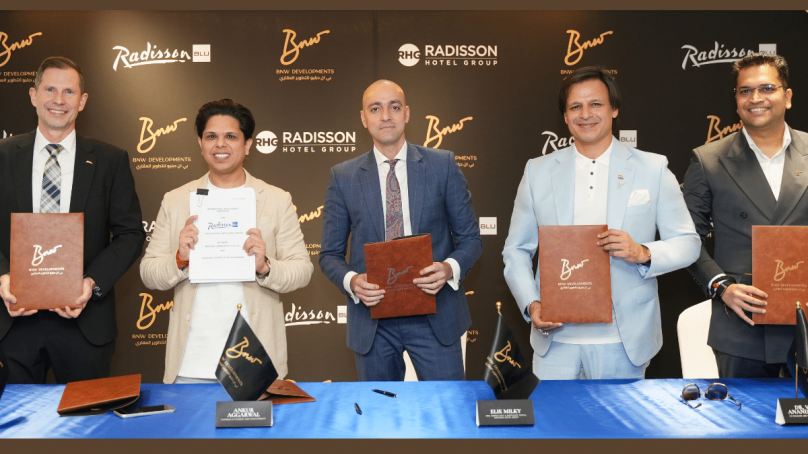
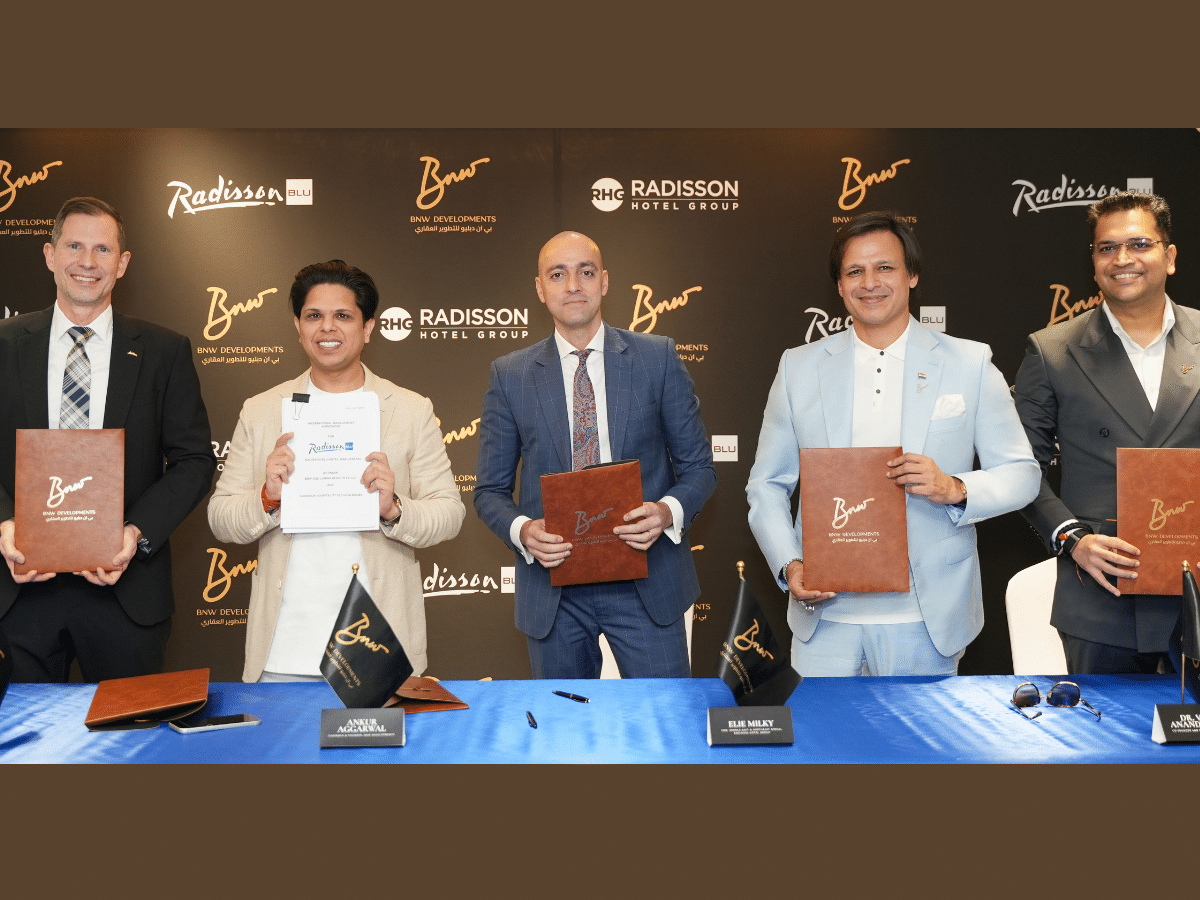
Radisson Blu Hotel and Residences is scheduled to open in 2029 within RAK Central, strengthening Ras Al Khaimah’s expanding hospitality and tourism sector.
The project results from a partnership between BNW Developments and Radisson Hotel Group, expanding branded hospitality offerings across the northern emirate.
Strategic location
The development will rise in RAK Central, an emerging commercial and lifestyle destination shaping the emirate’s next phase of growth. Furthermore, the district integrates offices, residences, hospitality venues and retail experiences, creating a modern work and lifestyle environment in Ras Al Khaimah. Additionally, its strategic location near Al Marjan Island strengthens connectivity between business tourism and leisure-driven developments.
Hotel and residences
The Radisson Blu Hotel will feature 361 keys positioned above retail and cinema offerings, forming a vibrant mixed-use destination. The property will include five dining venues, rooftop leisure areas, meeting spaces, a spa, gym, Business-Class lounge and family facilities. Moreover, the adjacent Radisson Blu Residences will introduce 222 branded residential units designed to complement the hospitality offering. Consequently, residents will benefit from hotel-managed services, ensuring a seamless lifestyle experience supported by operational synergies across the development.
Opening in 2029
The project reflects Ras Al Khaimah’s continued growth as a competitive destination for tourism investment and hospitality expansion. Once completed in 2029, the development will further strengthen Ras Al Khaimah’s position as an emerging hospitality hub in the UAE.
Elie Milky, chief development officer, Middle East, NE Africa, Cyprus and Greece at Radisson Hotel Group, highlighted the emirate’s potential. He said: “This signing reflects our ambition as we continue to grow our hotel and branded residential offering in the region and particularly in high-potential destinations across the UAE. Ras Al Khaimah continues to stand out with its strong infrastructure pipeline, investment momentum and expanded mix of demand drivers.”