A guest stepping into Kayzo in Riyadh—formerly known as Le Billionaire—is first struck not by the menu. Instead, it is the setting that commands attention. High ceilings, polished marble and a central bar designed for spectacle still evoke the architectural language of imported luxury. It could be Paris, Dubai or London. Only gradually does it become clear that the logic has changed.
Where Le Billionaire once embodied a globally recognizable nightlife formula, Kayzo signals a different ambition. Intriguingly, the room now hosts a Japanese-inspired, family-friendly concept built around sharing plates, casual pacing and operational flow. Dishes arrive as they are ready and are placed at the center of the table. Significantly, the emphasis is no longer on exclusivity, but on repetition.
Competing across the board
This transition is emblematic of a wider shift across Saudi Arabia’s restaurant industry. Previously, the kingdom may have been content to host international brands alone. These include Parisian institutions, for example, such as Benoit, and global chef-led concepts like Café Boulud by Daniel Boulud. Today, however, it is increasingly producing its own restaurant brands. And tellingly, these are designed from the outset to compete with these imports on quality, consistency and conceptual clarity.
This evolution reflects a broader transformation within Saudi Arabia’s food and beverage sector. The market is no longer defined solely by imported brands or celebrity-chef flagships. Instead, local restaurant concepts are emerging with the structural discipline required to compete on quality, efficiency and brand clarity. And crucially, they are poised to do so not just at home, but potentially abroad.
From statement restaurants to operational systems
What distinguishes this new generation of Saudi restaurants is their conception as systems rather than one-off expressions. Tellingly, these businesses are designed with repeatability in mind. For example, they comprise controlled menus, adaptable layouts and defined brand identities that can be reproduced without diluting quality.
Importantly for hospitality operators and investors, this marks a critical shift. Restaurants are no longer evaluated purely on creativity or prestige. Rather, they are assessed on their ability to function reliably across locations, teams and customer segments.
Premium-casual as a scalable sweet spot
A dominant format emerging from the Saudi market is the premium-casual dining segment. Positioned between fine dining and mass casual, it balances ambition with accessibility. As a result, it is structurally well suited to expansion. Many of the kingdom’s leading restaurants operate in a space that balances ambition with accessibility. Significantly, they are choosing not to replicate the fine-dining, chef-as-artist model that defined earlier international expansions.
This reflects Saudi Arabia’s complex consumer base and a persistent dilemma faced by restaurant managers. Saudi customers tend to favor generous, meat-forward dishes. Meanwhile, expatriates—particularly families—seek lighter options and greater variety. Unsurprisingly, the most successful Saudi concepts address both expectations within a single, coherent menu.
Premium casual formats—often fusion-driven but culturally grounded—offer the flexibility required for repetition, adaptation and scale.
Six spotlights
1. Takya: Contemporary reinterpretation. Based in Riyadh, Takya has become one of the most internationally visible Saudi restaurants. Female-led and premium in positioning, it reinterprets traditional Saudi dishes through contemporary techniques while keeping their origins explicit. Although Takya is not structured as a franchise, it functions as a cultural reference point. Importantly, foreign media seeking to understand Saudi cuisine beyond stereotypes frequently cite it in their content.
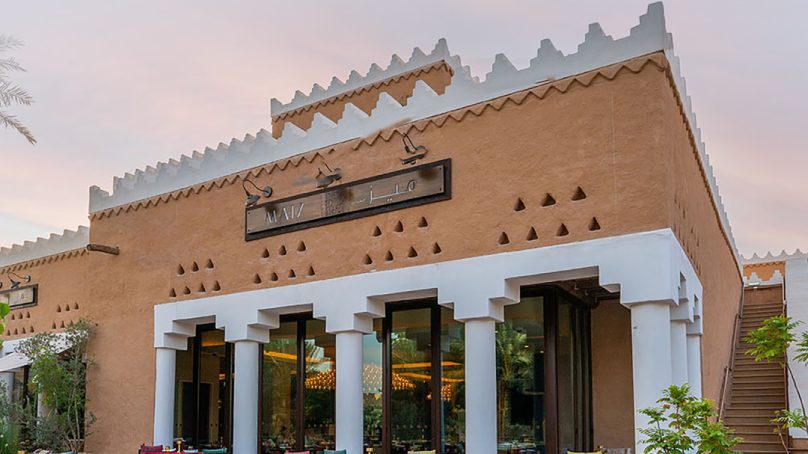
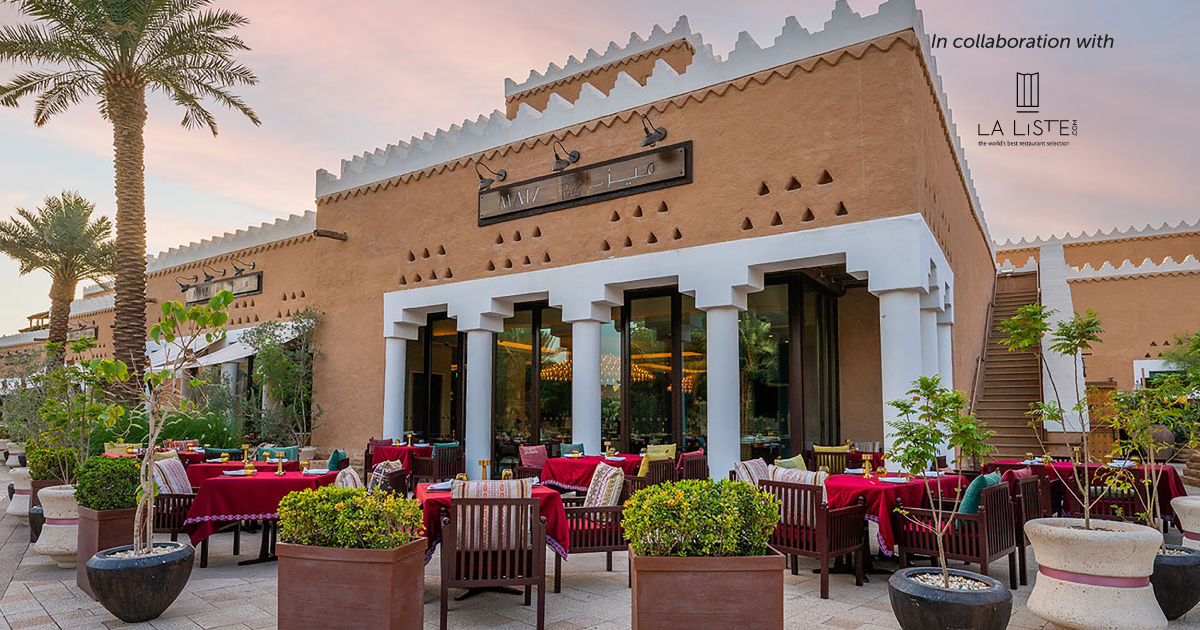
2. Maiz: Rooted in authenticity. Also Riyadh-based, Maiz follows a more direct path. Its strength lies in authenticity and clarity: dishes that are unmistakably Saudi, grounded in tradition and designed for consistency. In time, Maiz may expand through tourism-linked flagships rather than franchising. However, it plays a crucial role in codifying Saudi cuisine in a form that can travel.
3. Tilia: Excellence as an ecosystem builder. Tilia represents a high-end expression of Saudi tradition. Its menu, including lamb saleeg, mandi, jarish and shrimp stew, demonstrates depth and technical mastery. Tilia is not conceived as a scalable concept. However, its contribution is structural. It establishes a benchmark that reinforces the credibility of Saudi cuisine at the upper end of the market. Such restaurants strengthen the ecosystem from which scalable concepts emerge. They build cultural capital that more operationally flexible formats can later convert into growth.
4. Myazu: High-end dining made fun. Founded by Faisal Shaker and operating in Riyadh and Jeddah, Myazu offers contemporary Japanese cuisine with an international twist. High-end ingredients are paired with a relaxed, fun-loving atmosphere. Additionally, the creation of its in-house music label, Utopia, signals a broader brand logic extending beyond the plate.
5. Kayzo: Convivial cuisine. Myazu’s casual spin-off translates this DNA into a relaxed, family-friendly environment focused on sharing, informality and flow. Japanese inspired comfort dishes arrive as they are ready and are placed in the middle. This approach encourages conviviality while maintaining efficiency. Importantly, Myazu and Kayzo illustrate a particularly relevant growth model among Saudi-born concepts: the transition from flagship to scalable ecosystem. Myazu builds aspiration and credibility, while Kayzo converts that equity into a repeatable, high-throughput concept.
6. Momo: Portability and regional incubation. Operating at an accessible price point, this Riyadh-based dim sum and dumpling concept is built around inherently modular food. Dumplings standardize easily, travel well and suit both dine-in and takeaway models—qualities that align naturally with franchising.
Competing at home before exporting
The rise of Saudi-born concepts is particularly significant because it occurs in a market already shaped by experienced international players. With brands like Benoit and Café Boulud operating locally, Saudi restaurants are compelled to compete from the outset in several areas. These range from operational discipline and service standards to brand coherence.
Crucially, this competitive environment leaves little room for improvisation. Only restaurants designed as systems—with clear menus, strong brand language and repeatable processes—can endure. In that sense, Saudi Arabia’s domestic market functions less as a barrier to export than as a training ground.
Challenges remain, however. Ingredient authenticity, cultural translation and the global unfamiliarity of Saudi dishes, such as mantu, must still be addressed. Yet supported by Vision 2030 and growing tourism flows, Saudi restaurants are increasingly learning to translate rather than imitate.
The conclusion is, undoubtedly, becoming difficult to ignore: Saudi’s best restaurants are building brands, not temples. And the advantage of having learned to compete at home, against some of the world’s most established concepts? As a result, they are now better positioned to travel abroad.

Jörg Zipprick,
co-founder and editor-in-chief
La Liste
laliste.com
@laliste1000