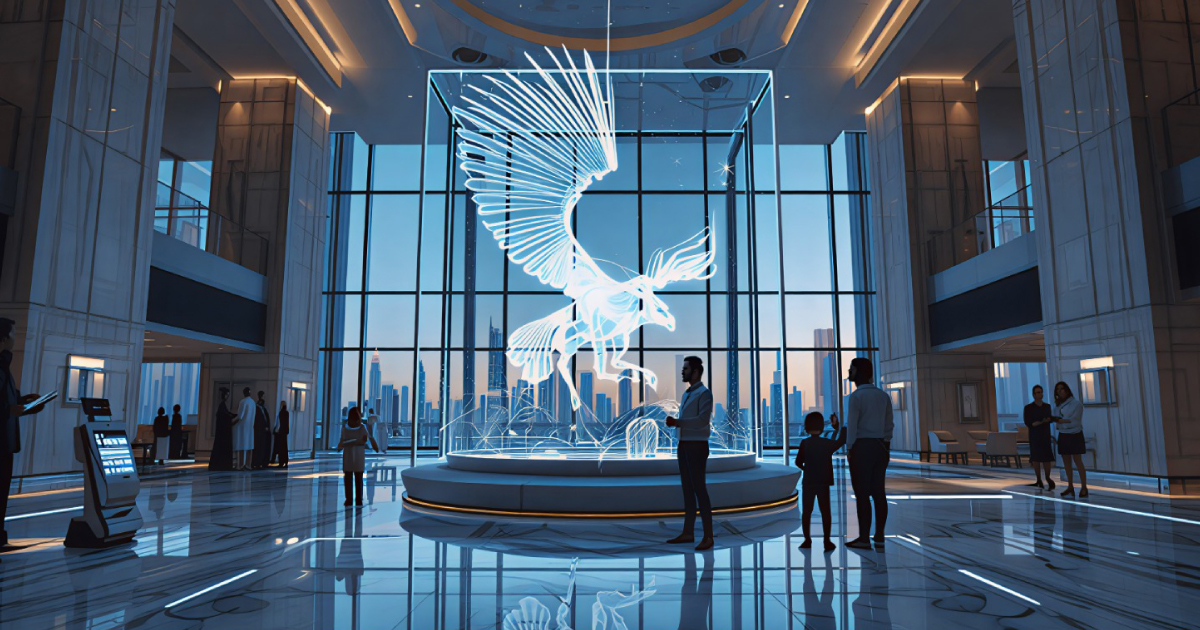
The global hospitality sector is moving from a service-based model to an experience-driven economy, where the boundaries between physical stays and digital engagement are increasingly blurred.
Interactive entertainment, from high-fidelity gaming to immersive augmented reality (AR), has emerged as a critical engine for this transformation. Notably, latest available data from 2024 shows the global gaming tourism market expanded to over USD 635 billion, with properties offering AI-enhanced entertainment options seeing consumer spending increase by 5-10 percent.
No longer a secondary amenity, these technologies are reshaping destination strategies, particularly in the Middle East, where giga-projects are being architected with digital immersion at their core.
However, the real game-changer is the artificial intelligence (AI) that powers these experiences. Indeed, by turning passive entertainment into active, personalized engagement, AI enables a new standard of customized hospitality that drives innovation and growth.
1. Beyond points: the AI-driven gamification of loyalty
The traditional earn-and-burn loyalty model is losing effectiveness with modern travelers who seek emotional connections rather than simple rewards. As a result, the industry is shifting toward gamified loyalty, turning guest journeys into rewarding missions. However, success relies heavily on AI analytics.
Static gamifications, such as granting a generic badge for checking in, often feel impersonal and disconnected from guest interests. In contrast, AI-enhanced systems analyze guests’ historical data, dining preferences and other behaviors to generate truly personalized challenges that resonate with individual motivations. For example, an AI algorithm might recognize a guest as a wellness enthusiast and dynamically offer a “Health Quest,” where booking a wellness activity will unlock a complementary amenity pass.
Indeed, practical applications are already emerging across the region, with major international hotel groups piloting AI-powered platforms that gamify sustainability initiatives. These reward guests for reducing water consumption, opting out of daily housekeeping or making eco-friendly dining choices. Ultimately, this approach utilizes psychology to drive revenue while aligning guests with corporate responsibility goals.
2. Enhancing reality: AR that enriches the destination
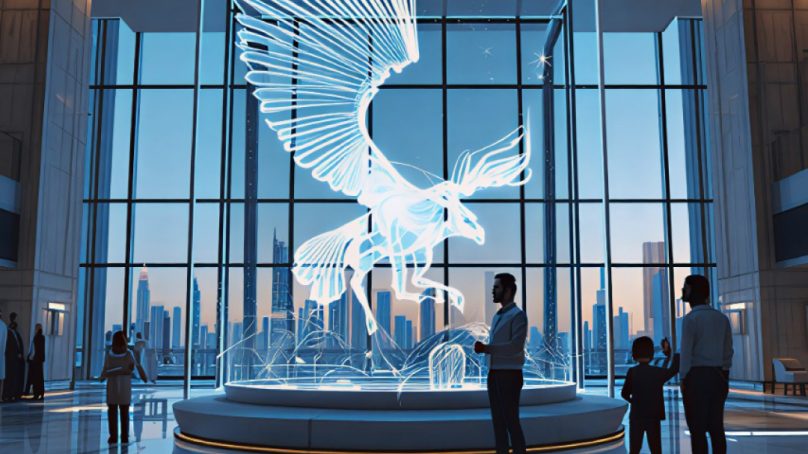
For hospitality operators, the true value of AR lies in its ability to overlay a digital concierge onto physical property. Significantly, moving beyond novelty applications, this technology is becoming a core operational tool, with the Middle East’s luxury sector leading a shift toward computer vision-enabled amenities.
For instance, instead of static paper menus, guests can point smartphones at QR codes to see 3D holographic representations of dishes. Moreover, this same AR intelligence extends to solving navigation challenges in the expansive properties typical of the Middle East. AI-powered AR apps act as real-time guides, projecting virtual arrows onto guest screens to lead them seamlessly from suites to meeting rooms. Additionally, this intelligent layer can unlock each hotel’s unique narrative. Guests might scan lobby art to view artist videos or point phones at architecture to learn design inspiration, deepening their connection to the property without requiring staff intervention.
3. The try-before-you-buy revolution: immersive VR previews
Virtual Reality (VR) has graduated from consumer novelty to a high-stakes sales instrument, particularly within the Middle East’s booming real estate sectors. For industry operators, VR is no longer about entertainment. Instead, it serves as a conversion engine. Crucially, in a region defined by ambitious giga-projects like NEOM and the Red Sea Global, where destinations are often sold before construction completion, digital twins have become essential.
These high-fidelity VR environments allow prospective wedding planners in London or conference organizers in Shanghai to walk through Riyadh ballrooms, inspecting sightlines and arrangements with precision without boarding flights. Importantly, this capability drastically shortens sales cycles for high-value assets. Moreover, forward-thinking operators are now integrating AI analytics into their virtual tours to capture detailed user behavior data. In turn, this tracking enables sales teams to create targeted proposals that significantly increase booking confidence.
4. The new frontier: AI-powered personalization tech
If VR and AR are the visible face of interactive entertainment, artificial intelligence is the invisible brain that makes them commercially viable. The next frontier of hospitality is moving from reactive service to predictive personalization. Notably, in the luxury tier, guests no longer accept generic automated messages but expect environments that adapt to their unspoken preferences.
Leading hotel groups in the region are deploying algorithms that analyze guests’ historical data spanning dining choices, room temperature settings and entertainment consumption to curate hyper-personalized stays. In practice, upon check-in, AI-driven, in-room entertainment systems dynamically reorder content based on guest profiles, adjust room temperature and recommend specific resort activities. Ultimately, this shift from static amenities to intelligent, adaptive environments elevates guest satisfaction while driving ancillary revenue by presenting the right offer at the precise moment guests are most likely to accept.
5. Agentic AI: the proactive digital concierge
Perhaps the most significant leap forward is the emergence of agentic AI, autonomous agents capable of reasoning and acting rather than just responding. While traditional chatbots wait for guests to ask questions, agentic AI is designed to proactively manage guest experiences.
For the Middle East hospitality market, this represents a shift from service on demand to anticipatory care. In practice, AI agents integrated into hotel property management systems monitor real-time variables and act independently to resolve friction points like missing transfer arrangements or weather-related activity suggestions. Ultimately, this seamless, invisible coordination defines the future of luxury service, allowing human staff to focus on emotional connection rather than logistical administration.
A vision for the region: pioneering interactive luxury
The Middle East stands uniquely positioned to lead this global transformation. Unlike established markets constrained by legacy infrastructure, the region is building its tourism ecosystem from the ground up with a digital-first approach. From Qiddiya’s gamified master plans to Red Sea Global’s regenerative tourism models, interactive entertainment is being woven into destination DNA rather than added as an afterthought.
Consequently, this presents hospitality professionals with competitive advantages. Properties embracing gamified loyalty, augmented reality, immersive VR and agentic AI can deliver levels of personalization and seamless experience that traditional destinations struggle to match. Crucially, the objective is not replacing the region’s celebrated hospitality culture but amplifying it through intelligent technology that ensures every guest feels genuinely understood and valued. In this emerging landscape, success belongs to those who recognize that exceptional hospitality now requires both human warmth and digital intelligence working in perfect harmony.

DR. JASSIM HAJI
President
Global AI Group
@dr_jassim_haji