Cheap flights. Cruise ships. Selfie sticks. Every few months the tourism industry assembles another list of culprits to blame for overtourism. Then, it issues another set of caps and levies, and the queues form again. As a result, the residents protest. Again. Nothing fundamentally changes.
Overtourism is not caused by too many tourists. Rather, it is caused by too many tourists receiving the same algorithmic instruction at the same moment and acting on it simultaneously. In other words, it is a synchronization problem. A machine-learning problem. A systems problem. And, moreover, we have been trying to solve it with a marketing toolkit!
The algorithmic funnel
Hallstatt, a tiny village in Austria with 780 residents, now receives over 1 million visitors a year. At peak, 10,000 people crowd its narrow lakeside lanes in a single day. The town tried to erect anti-selfie barriers to block the famous viewpoint. However, the tourists are not really the story. The algorithm is.
If something photographs beautifully, social platforms amplify it. Engagement rises. The result is not organic discovery. Instead, it is algorithmic convergence. Millions of people receive the same digital signal: “Go here.” And, unsurprisingly, they do. Modern tourism is no longer guided by curiosity or editorial judgment, but by engagement metrics. And engagement metrics optimize for spectacle, not sustainability.
The numbers we are not talking about
The industry is fixated on arrivals. A total of 1.47 billion international trips in 2024, up 12.2 percent year-on-year. Indeed, record numbers everywhere. Japan hit 36.9 million foreign visitors, with tourism surpassing semiconductor exports as the country’s second-largest earner. Elsewhere, Morocco reached 17.4 million visitors, pushing revenue up 20 percent. By any headline measure, tourism is thriving.
But what if the headline measure is the wrong measure and the real metric is concentration? This is a problem that social media algorithms and Gen AI are uniquely engineered to cause.
According to Statista, approximately 40 percent of global travelers already use AI-based tools for trip planning. Among Millennials and Gen Z, that figure is 62 percent. The AI tourism market is projected to reach USD 13.9 billion by 2030, up from USD 3.37 billion in 2024. Over half of senior travel technology leaders report their companies now use generative AI during booking.
However, these systems are not curating the world. When travelers ask a chatbot where to go, they do not distribute demand across the full range of possible destinations. Instead, they surface the places with the highest training-data representation. In other words, the most visited, the most photographed and the most written about. Meanwhile, the ones actually capable of absorbing more visitors without breaking remain structurally invisible to the model.
The Fjadrárgljúfur canyon in Iceland sat quietly unknown until Justin Bieber filmed a video there. Within two years, annual visitor numbers nearly doubled. That is not a cautionary tale about celebrity. Rather, it is a textbook demonstration of algorithmic amplification preceding institutional capacity.
“Smart tourism” was never smart
For a decade, destinations have been talking about becoming “smart.” Usually, this meant public Wi-Fi and a mobile app that pushed restaurant recommendations. But that is not intelligence. A genuinely intelligent destination anticipates demand.
For example, sensor networks measure footfall in real time, while mobility data reveals movement patterns across districts. Additionally, machine-learning models trained on weather, flight arrivals, event calendars and social media velocity predict crowd surges. And digital twins simulate what happens if cruise arrivals increase or a major festival draws crowds into one neighborhood.
Amsterdam has already begun using computer vision systems to estimate real-time crowd density in popular areas. Singapore does it too. The technology already exists. Even so, the will to deploy it at scale does not yet.
MENA’s structural advantage
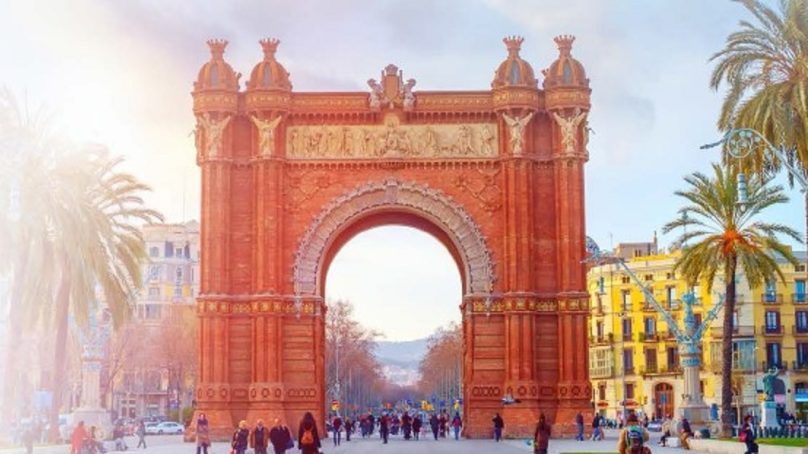
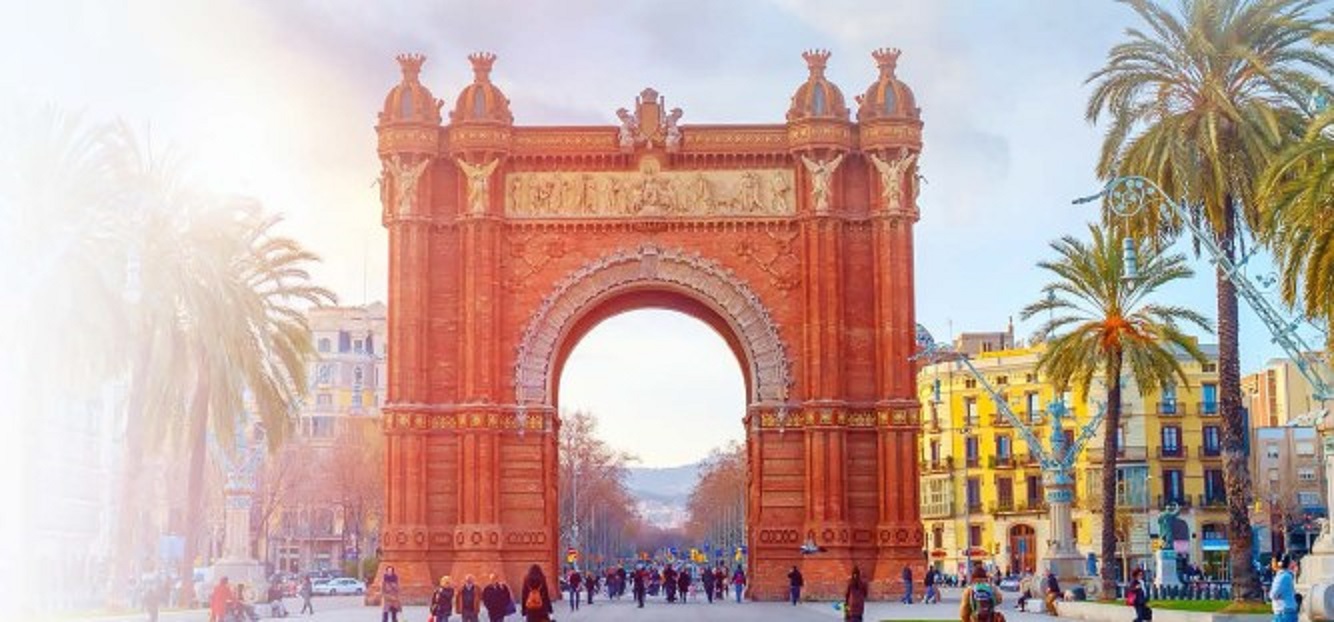
Europe’s problem, by contrast, is irreversibility. Venice, Barcelona, Amsterdam and Dubrovnik are trying to retrofit 21st-century flow management onto medieval street grids and analog governance structures. Tourism patterns calcified decades ago. Admittedly, changing them requires fighting entrenched commercial interests, fragmented municipal jurisdictions and political constituencies built on visitor volume. It is not impossible—rather, it is just very slow.
Significantly, the Middle East is building its tourism infrastructure now. That is not a minor detail. In contrast, it is the entire argument! Saudi Arabia is designing its giga projects in an era when AI is a mainstream infrastructure layer, not an experimental add-on. The decisions being made today about data architecture, booking systems, mobility infrastructure and visitor identity are crucial. In turn, they will determine whether these places become intelligent destinations or very expensive queues.
Dubai is the nearest proof of concept. The emirate recorded around 19 million overnight visitors in 2024. Tellingly, this was more than three times the resident population, managed without the civic breakdown visible in European counterparts. The reason is not hospitality culture. Dubai’s transport systems, immigration services, hospitality sector and government platforms operate on highly integrated digital networks. As a result, visitor flows can be observed and adjusted in near real time.
It is not perfect. That said, it is a model of what tourism governance looks like when it functions as a system rather than a marketing campaign.
A new job description for tourism leaders
For most of the 20th century a national tourism board had one real job: attract arrivals. Then count them and, afterward, report growth. That model is over. Or, certainly, it should be. The destination organizations that matter in the next decade will look more like urban operating systems. They will employ data scientists alongside creative directors, and behavioral economists alongside brand strategists. Their dashboards will track visitor distribution indices, ecosystem stress indicators and resident quality-of-life scores, not just arrivals.
AI as an overtourism risk
There is, of course, another possibility. AI could make overtourism worse. An algorithm optimized for revenue and volume will ignore displacement costs and carrying capacity. Meanwhile, life for residents becomes harder, noisier and more expensive. Yet, although technology amplifies the intention behind it, it does not supply the intention. That is a governance problem, not an engineering problem. And it is the reason that the most important question in destination AI is not which platform to deploy. Rather, it is: what exactly are we optimizing for? Revenue? Volume? Legitimacy? Choose well, and the algorithm will pursue it with machine efficiency. However, choose poorly, and smart tourism becomes a more sophisticated version of the same extraction.
The real provocation
Overtourism is not an accident. Instead, it is what happens when a destination is marketed like a product but governed like nothing at all.
The Middle East is building tourism systems in an era where AI is infrastructure. As a result, the region can design something the rest of the world never did. The algorithm created the problem; only a smarter, more intentional use of AI will solve it. And the time for building that intelligence into the foundations, rather than bolting it on afterward, is now.
Get that right, and the region builds something the world has not yet seen. A major tourism destination that uses AI not to attract more visitors, but to understand them. To distribute them. And to sustain the thing that made them worth attracting in the first place. Get it wrong, and you build Hallstatt at scale. Only faster. And with better branding.

Aradhana Khowala,
founder and CEO
Aptamind Partners
aptamind.com
@aptamind