Seasonality, terroir and the evolution of Japanese dining in Amman

Seasonality, terroir and the evolution of Japanese dining in Amman

Yugen Jordan

As the Middle East’s dining scene evolves, restaurants across the region are moving beyond imitation and building stronger culinary identities. In Jordan, this change is especially visible in Japanese cuisine, where omakase dining continues to attract growing interest.

Japanese cuisine is often linked to imported luxury ingredients. However, its true foundation is far deeper. Japanese cooking centers on seasonality, balance, restraint, and respect for ingredients at their best. This philosophy allows the cuisine to adapt to different cultures while preserving its character and discipline.

Learning from global examples

One of the best known examples is chef Nobu Matsuhisa’s work in Peru. Rather than recreating Japanese cuisine ingredient by ingredient, he embraced local produce, citrus, peppers, and regional flavors. In doing so, he created Nikkei cuisine, a style that respects both Japanese technique and Peruvian terroir.

Today, the same thinking influences Japanese dining in Amman and across Jordan. Instead of relying only on imported ingredients, chefs explore ways to incorporate Levantine and Jordanian produce into Japanese dishes. Seasonal citrus, local herbs, vegetables, and olive oils complement traditional techniques without overshadowing them.

A local approach to Omakase

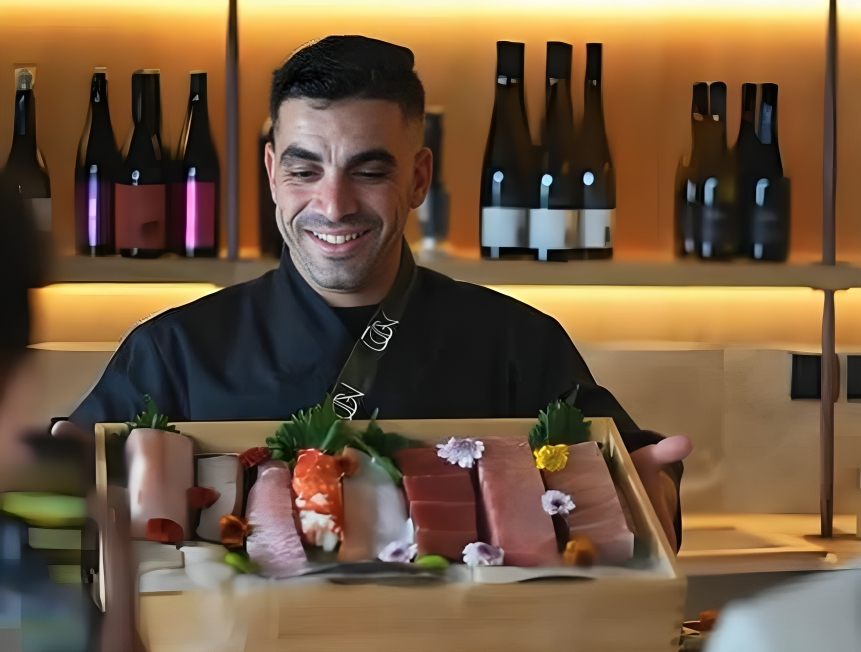
At Yūgen in Amman, this philosophy shapes the restaurant’s chef led omakase experience. The team carefully selects local ingredients to support the menu rather than importing products solely for replication. These ingredients enhance acidity, aroma, freshness, and balance while respecting the core principles of Japanese cuisine.

The restaurant maintains a strong focus on authenticity throughout the experience. Fish remains the centerpiece of every menu, while chefs prepare the rice with precision and care. They apply seasoning, acidity, and garnishes with restraint to create harmony and balance.

Redefining authenticity

This approach reflects a broader shift in Japanese dining around the world. Today, authenticity no longer depends on importing every ingredient from Japan. Instead, it comes from respecting the techniques, principles, and philosophy that define the cuisine.

For Amman, this evolution signals a more confident and mature dining scene. Concepts such as Yūgen show how restaurants can achieve international relevance through thoughtful interpretation rather than imitation. They combine technical excellence with a strong sense of place.

As Jordan’s hospitality sector continues to grow, this approach is reshaping how diners understand and value authenticity. Japanese cuisine in the country is entering a new phase guided by seasonality, terroir, and careful adaptation to local ingredients and tastes.

yugenjo_

For more news click here

Add to Favorites
About author

Rita Ghantous

Rita Ghantous is a hospitality aficionado and a passionate writer with over 9 years’ experience in journalism and 5 years experience in the hospitality sector. Her passion for the performance arts and writing, started early. At 10 years old she was praised for her solo performance of the Beatles song “All My Love” accompanied by a guitarist, and was approached by a French talent scout during her school play. However, her love for writing was stronger. Fresh out of school, she became a freelance journalist for Noun Magazine and was awarded the Silver Award Cup for Outstanding Poetry, by The International Library of Poetry (Washington DC). She studied Business Management and earned a Masters degree from Saint Joseph University (USJ), her thesis was published in the Proche-Orient, Études en Management book. She then pursued a career in the hospitality industry but didn’t give up writing, that is why she launched the Four Points by Sheraton Le Verdun Newsletter. Her love for the industry and journalism led her to Hospitality Services - the organizers of the HORECA trade show in Lebanon, Saudi Arabia, Kuwait and Jordan, as well as Salon Du Chocolat, Beirut Cooking Festival, Whisky Live and other regional shows. She is currently the Publications Executive of Hospitality News Middle East, Taste & Flavors and Lebanon Traveler. It is with ultimate devotion for her magazines that she demonstrates her hospitality savoir-faire.

Your email address will not be published. Required fields are marked *