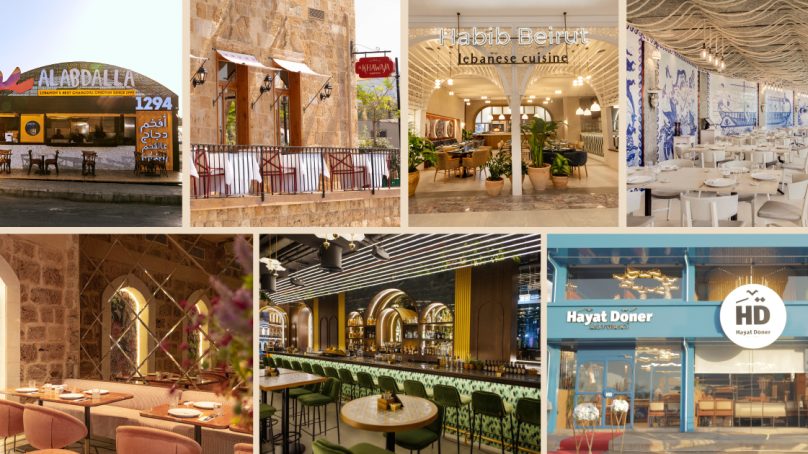
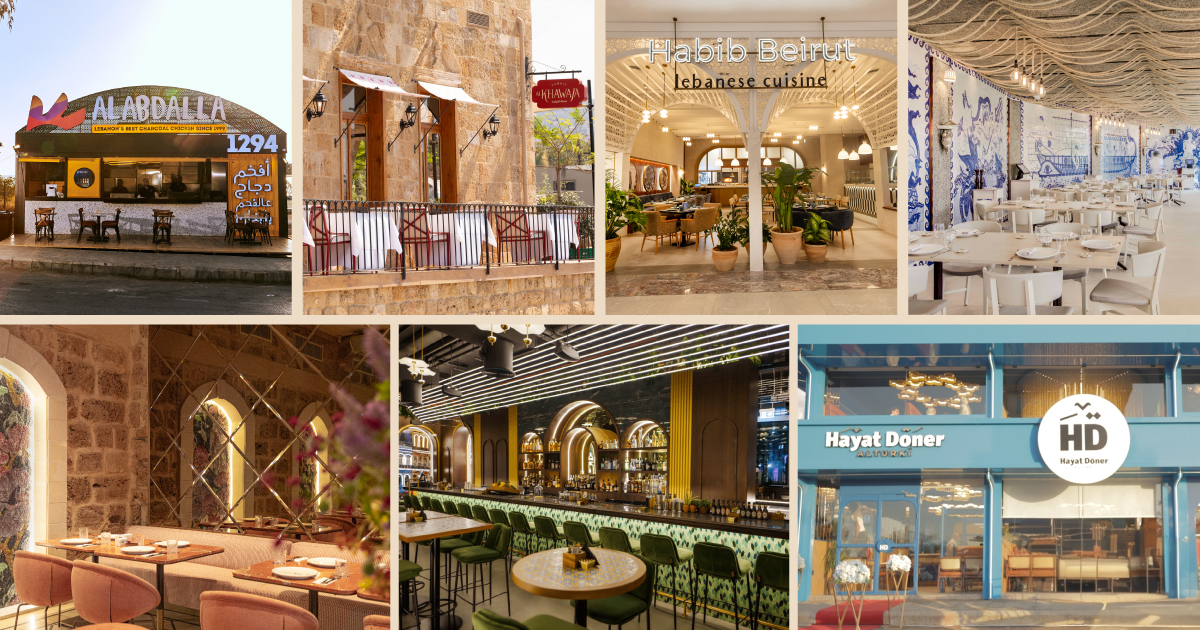
Despite prolonged economic challenges, Lebanon remains one of the Middle East’s most resilient incubators for hospitality brands. Lebanese restaurant concepts have expanded successfully across the GCC, Europe, Africa and beyond. Deep culinary heritage, entrepreneurial agility and a long-standing franchising culture drive this growth.
Consequently, Lebanese restaurants now span multiple segments. From fast casual to fine dining, these concepts demonstrate remarkable diversity. Similarly, bakery retail and specialty cafes showcase proven scalability. Importantly, these brands combine strong brand equity with scalable business models. As a result, they are increasingly attracting regional and international investors. Among Lebanon’s hospitality landscape, select homegrown concepts stand out for their clarity of vision, operational maturity and investment readiness.
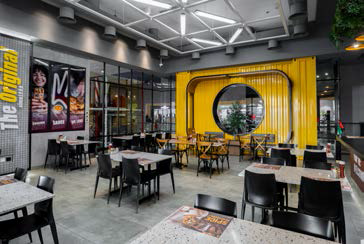
AL ABDALLA INTERNATIONAL GROUP
About the group: Al Abdalla began in 1999 with a simple focus on unforgettable chicken flavor. Starting as a small operation, the brand grew to 25 branches across Lebanon by 2025. Expansion then extended internationally, with locations across the UAE, Iraq, Qatar, Jordan, Oman, Saudi Arabia, Greece, Germany and France. To ensure consistent quality and protect signature flavors, Al Abdalla built and operates its own vertically integrated supply chain, including farm, slaughterhouse, kitchen and production facilities. Today, the brand serves communities across three continents with authentic charcoal-grilled chicken.
Contact: Layal Haidar, franchise director
Email: lhaidar@alabdallahresto.com
Franchise concepts: Al Abdalla
From the company:
Franchise appeal: Our franchise offers a proven, profitable quick-service model built around charcoal-grilled chicken. The concept combines strong brand recognition across multiple countries with diversified revenue streams through dine-in, takeaway, delivery and cloud kitchens. This ensures resilient cash flow and consistent performance. The model delivers high margins through controlled food and labor costs, simple operations and fast break-even periods. Flexible formats allow partners to choose from flagship restaurants, food courts, kiosks or cloud kitchens based on market conditions. Franchisees receive end-to-end support covering site selection, design, training, supply chain management and ongoing performance monitoring.
Unit economics: The brand is built for smart scalability. The model delivers approximately 20 percent net profit margins, well above quick-service restaurant averages. Franchisees typically achieve payback within 12 to 18 months. The group generates USD 50 million in annual revenue, reflecting strong market demand and operational efficiency across markets.
Market potential: Lebanon remains our strongest market, anchored by established brand equity and deep customer loyalty. Dubai has emerged as a key growth market, attracting diverse nationalities through high-traffic locations and strong delivery platform performance. Our international footprint now spans three continents and eight countries, demonstrating the concept’s adaptability across different markets and consumer preferences.
Growth drivers: Our charcoal-grilled positioning differentiates us from heavily fried competitors while meeting growing demand for healthier quick-service options. The open charcoal-grilling theater creates an engaging customer experience and emotional connection. Family-value bundles drive higher average orders and repeat visits. Notably, 80 percent of customer traffic comes from brand loyalty and word of mouth rather than digital advertising, demonstrating strong organic growth and customer satisfaction.
Operational strength: Our vertically integrated supply chain sets us apart. Operating our own farm, slaughterhouse and production facilities ensures quality control and flavor consistency across all locations. Streamlined recipes and standardized operating procedures reduce food waste and maintain consistency. Central-kitchen compatibility supports efficient scaling while controlling costs. Additionally, we leverage technology through delivery aggregators, performance dashboards and data-driven menu optimization. Real-time monitoring enables franchisees to manage profitability with precision across all formats.
Training and development: Franchisees and key staff complete comprehensive hands-on training before opening. This covers kitchen operations, food safety, customer service, point-of-sale systems and financial controls. Our team provides on-site support during soft opening and launch phases. Ongoing development includes refresher workshops, new menu training, performance reviews and regular operational audits. Franchisees also receive continuous coaching in marketing strategies, cost control and performance management to maximize profitability and operational excellence.
AL KHAWAJAT GROUP
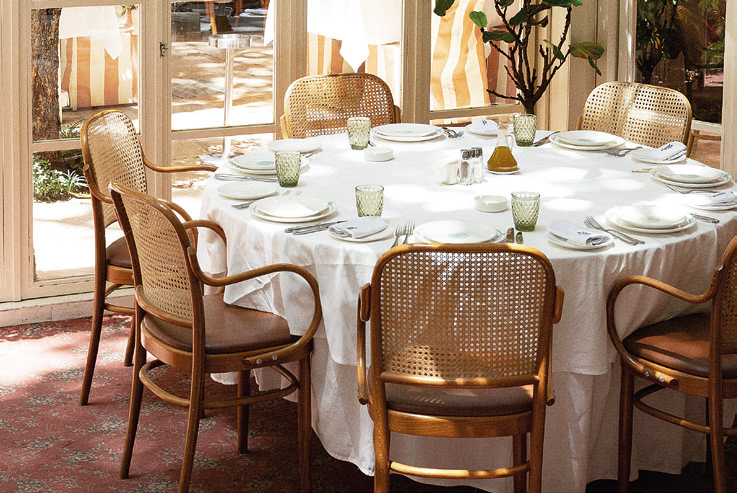
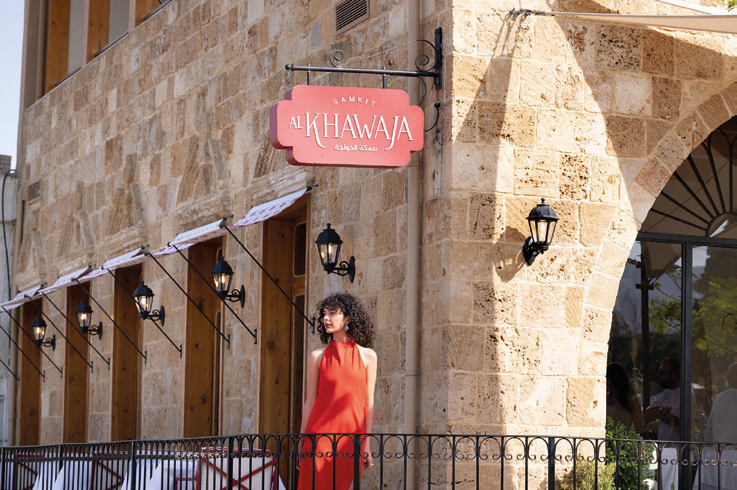
About the group: Al Khawajat Group currently operates in Lebanon and serves more than 150,000 guests annually across its three restaurants. A fourth location is opening soon. Each venue offers an individual, location-driven experience. Jnaynit Al Khawaja in Faqra is a seasonal mountain retreat with cozy winter warmth and lively summer terraces, featuring grills, saj and valley views. Al Khawaja in Ashrafieh blends refined Lebanese cuisine with daily specials in an elegant 1960s-era city setting. Samkit Al Khawaja in Batroun celebrates the Mediterranean coast with freshly caught seafood. The menu ranges from classic Lebanese dishes to contemporary signatures.
Contact: Christian Bou Chaaya, CEO
Email: christian@alkhawajatgroup.com
Franchise concepts: Jnaynit al Khawaja, Al Khawaja, Samkit al Khawaja and Qahwat al Khawaja
From the company:
Franchise appeal: Our appeal to potential partners stems from several key strengths. These include trusted industry legacy, which is anchored by Elie Mhanna, a fifth-generation restaurateur whose family roots date back to 1888. Then there is our culinary expertise, which ensures consistent quality and reliability. More broadly, the Al Khawaja brand has built strong recognition and reputation through years of memorable, authentic dining experiences.
Operational strength: We maintain consistent service, food quality and brand experience through a central kitchen. Our head chef and dedicated pastry chef supervise operations, ensuring every dish meets our standards. Moreover, we are progressing toward ISO certifications and other quality systems. These initiatives further strengthen operational excellence across all locations.
Training and development: We guide franchise partners at every step. This includes site selection, design, staffing and menu localization. Comprehensive training, corporate manuals and departmental coaching ensure operational excellence. Additionally, ongoing support includes marketing strategies, audits and business reviews. As a result, partners maintain quality, grow confidently and succeed while adapting seamlessly to their local markets.
Expansion strategy: Our expansion strategy focuses on both single-unit and multiunit growth. The approach depends on market potential and partner readiness. Initially, we prioritize establishing strong single-unit operations to ensure quality and operational excellence. Once a territory demonstrates success, we accelerate multi-unit growth. Ultimately, the aim is sustainable scaling with our partner.
Figures: We have experienced non-stop growth since opening. For example, in Faqra, we now serve over 2,000 guests daily. High table rotation, efficient operations and a dedicated team drive this success. Notably, year-on-year growth consistently exceeds 60 percent. This reflects strong customer demand, exceptional service and the widespread popularity of our brand across all locations.
B&K HOLDING
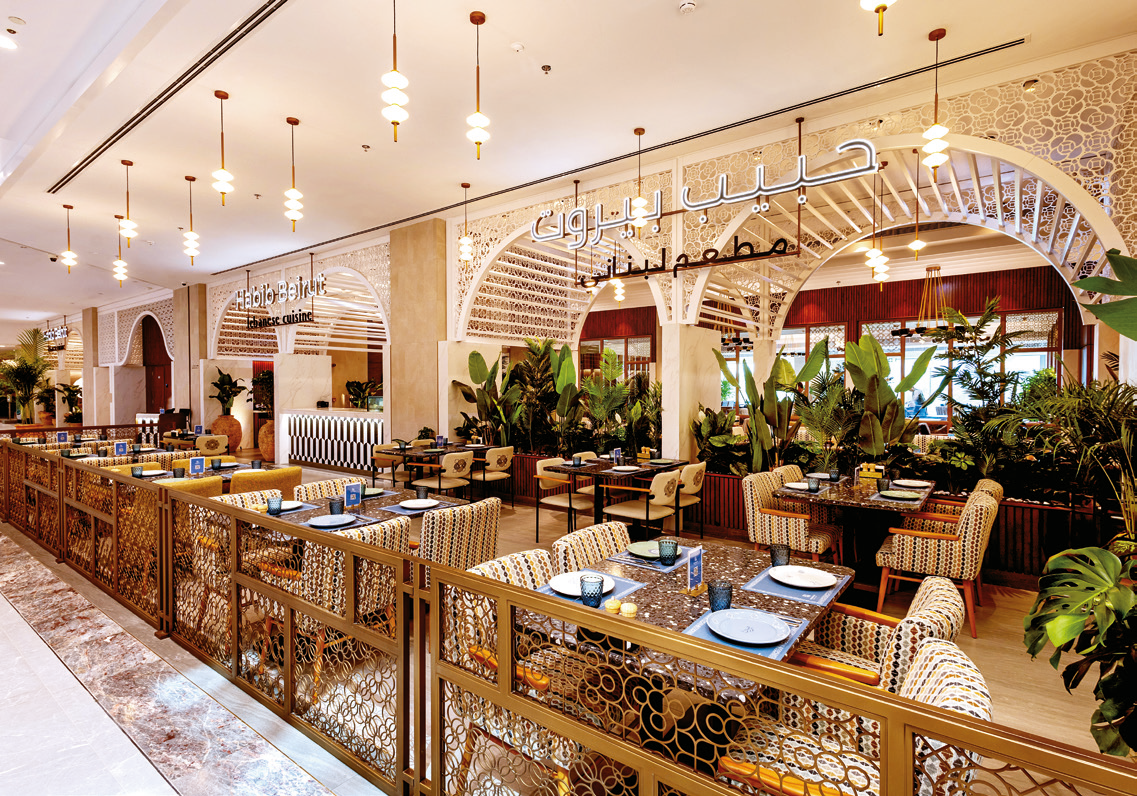
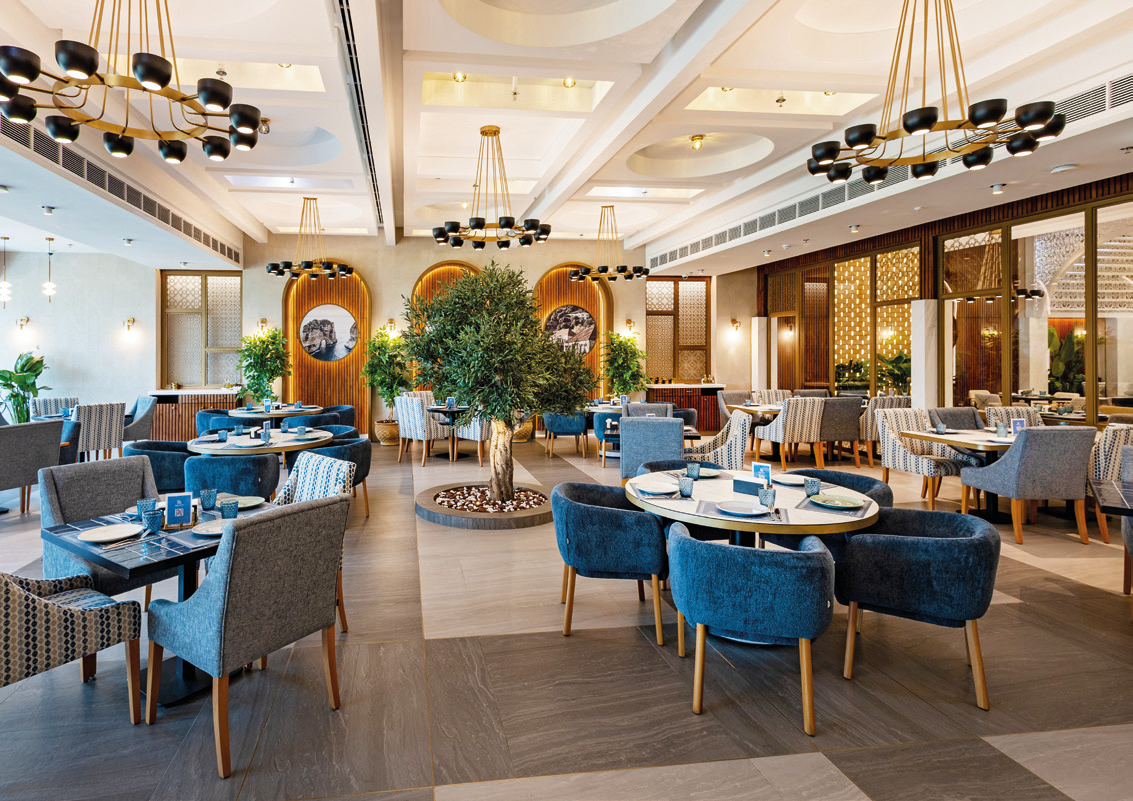
About the group: B&K Holding Group was founded in 2017 to create and provide individual food and beverage experiences. The portfolio spans Lebanese, Italian and Japanese cuisine restaurants, as well as food halls. Currently, the group is expanding across the Middle East and Europe. B&K Holding has a presence in six countries across 12 brands. The company has a proven track record of delivering high-level dining experiences for guests. These include varied fresh food options. The B&K Holding portfolio comprises several renowned concepts. These include Habib Beirut, Azzurro, Suburbia, Karam al Bahr and Olivo. Additionally, the group operates Mikel Coffee company, Wok & Roll, Shawarma Box and Chikky Chick. Other concepts include 8 Cuts, Happy Cream, Cheezy Burger, Salsalada and Man2oushe w noss. Looking ahead, B&K Holding is planning ambitious growth and aims to add more than 50 venues to its portfolio. Consequently, the concept footprint will extend across the GCC and throughout Europe.
Contact: M. Elie Bassil, COO and co-founder
Email: Franchise@habibbeirut.com
Franchise concepts: Habib Beirut
From the company:
Brand recognition: Habib Beirut enjoys strong local and growing regional brand recognition, particularly in the UAE. We measure brand strength through multiple metrics. These include repeat customer rates, sales performance and social media engagement. Additionally, delivery platform rankings and ongoing customer feedback reflect consistent trust and brand loyalty.
Growth drivers: Growth is driven by strategic high-footfall locations and a consistent, popular Lebanese menu. Furthermore, an efficient service model supports expansion. Our ability to adapt store sizes emphasizes delivery while maintaining competitive pricing. Importantly, we ensure quality throughout. As a result, each franchise unit maximizes reach and revenue potential.
Operational strength: We maintain consistency through standardized recipes and centralized procurement. Staff training programs and regular operational audits further support this. Clear brand guidelines and quality control systems ensure uniformity. Additionally, hands-on franchise support guarantees that food quality, service standards and the overall brand experience remain consistent across all locations.
Unit economics: A typical Habib Beirut franchise unit benefits from strong revenue potential and healthy operating margins. Efficient cost control drives profitability. Depending on location and format, franchisees can expect attractive profit margins. They also benefit from a reasonable payback period. High customer turnover and strong brand demand support these returns.
Innovation edge: Our innovation lies in balancing authenticity with modern dining expectations. We continuously update our menu and leverage delivery and ordering technology. Additionally, we enhance customer experience through efficient service and contemporary restaurant design. As a result, Habib Beirut stands out in a competitive casual dining market.
EM SHERIF GROUP
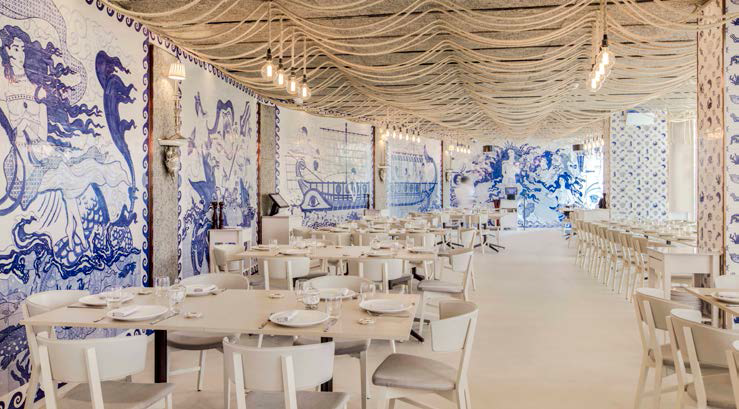
About the group: Em Sherif Group is a Lebanese hospitality brand founded by Mireille Hayek. The group offers fine-dining, cafe, seafood and ready-to-eat concepts. All concepts focus on authentic Lebanese cuisine and immersive dining experiences across MENA and Europe.
Contact: Mireille Hayek, founder and owner
Email: info@emsherif.com
Franchise concepts: Em Sherif Restaurant, Em Sherif Café, Em Sherif Sea Café and Em Sherif Deli
From the company:
Franchise appeal: Em Sherif’s franchise opportunity combines proven track record with strong brand recognition. The diverse portfolio spans fine dining, cafes, seafood and ready-to-eat outlets. Investors are drawn to the brand’s focus on immersive experiences and authentic Lebanese cuisine. Multi-concept growth, flagship culinary destinations and strategic international expansion demonstrate scalability and long-term profitability. The brand supports franchisees with comprehensive training, marketing and operational guidance, offering both differentiation and security for partners seeking alignment with a globally respected Lebanese hospitality brand.
Investment and costs: Em Sherif franchises require an initial investment tailored to each concept. Investments range from USD 500,000 for Em
Sherif Deli to USD 5 million for flagship restaurants. These cover capital expenditures, franchise fees, brand support, operational guidance and training programs. Costs vary depending on outlet size, location and concept type. Consequently, investors can enter the brand at multiple levels.
Market potential: Em Sherif has demonstrated strong demand in MENA and European markets. Key locations include Lebanon, UAE, Qatar, UK, Paris, Madrid, Monaco, Saudi Arabia and Egypt. This success stems from an increasing appetite for authentic Lebanese cuisine and immersive hospitality experiences. Lifestyle trends favor experiential dining, premium gastronomy and culturally rich concepts, further enhancing market potential. With growing interest in Lebanese culinary heritage, Em Sherif is well-positioned to scale and strengthen its presence across new territories.
Growth drivers: Em Sherif’s growth is driven by carefully selected locations and multi-concept expansion. High-quality culinary offerings and immersive customer experiences further fuel growth. Large-scale projects showcase the brand’s ambition. For example, the 3,500-square-meter Dbayeh culinary destination combines multiple concepts, cultural storytelling and interactive dining elements, attracting families, travelers and food enthusiasts. Consistency in food quality, service excellence and brand identity ensures repeat visits. Strategic innovation across menus, entertainment and lifestyle experiences strengthens differentiation. Additionally, the brand invests in staff training, operational frameworks and marketing support to maintain standards across all outlets.
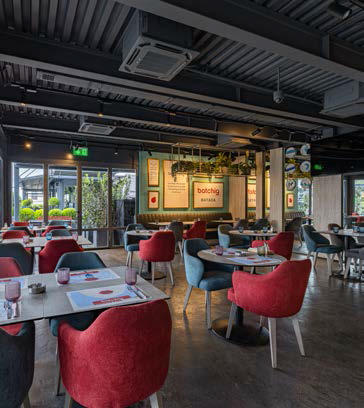
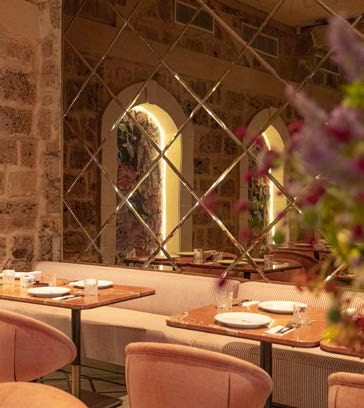
FIG HOLDING
About the group: Fig Holding creates culinary projects around Armenian heritage, from traditional Mediterranean and Anatolian forms to globalized urban inspirations. The group opened the world’s first Armenian restaurant in 2003 and has since achieved international recognition and successful franchise growth.
Contact: Aline Kamakian, founder and CEO
Email: aline@figholding.com
Franchise concepts: Mayrig and Batchig
From the company:
MAYRIG
Market potential: GCC and MENA markets have strong demand for Levantine cuisine. Armenian cuisine offers a differentiated alternative—familiar, premium and story-driven. Europe also presents strong potential, with large Arab and Armenian communities seeking authentic, culturally rooted dining experiences.
Growth drivers: GCC dining is shifting toward experience, storytelling and shareability. Mayrig’s Armenian heritage offers an authentic narrative that feels fresh yet familiar to Levantine palates. Ideal for group dining, it drives higher average checks, repeat visits and strong brand loyalty.
Operational strength: Standardized sacred elements protect identity: core recipes, plating, service flow, ambience, brand language and storytelling. Centralized recipe systems, approved suppliers and imported signature ingredients ensure consistency. Service SOPs, role-based training, audits and mystery shoppers maintain premium experience and cultural integrity across markets.
Training and development: Training is continuous. Management trains one month in existing branches before opening, with assessments. Teams receive pre-opening and on-site training with launch support. Ongoing development includes menu updates, brand refreshes, annual recertification, train-the-trainer programs and leadership workshops.
Risk and resilience: Mayrig enforces strict franchisee selection with mandatory GM and chef certification. KPI-based multi-unit expansion controls growth quality. Sacred versus flexible rules, contracts, audits and approved suppliers protect brand integrity. Dual sourcing, centralized procurement, approved substitutes and safety stock mitigate supply chain risks.
BATCHIG
Market potential: The GCC’s growing base of young professionals seeks casual, affordable, trend-driven dining, aligning with Batchig’s positioning. The concept also appeals to families and food enthusiasts through approachable pricing, modern vibe and adaptable menu. High-traffic urban and mall locations suit the concept well.
Growth drivers: Batchig focuses on all-day casual dining, targeting younger and middle-class audiences seeking quality at affordable prices. Best suited for high-footfall locations like large malls and beachside clusters, it drives volume and accessibility for scalable growth.
Operational strength: Standardization ensures consistency while allowing local flexibility in spice levels, SKUs, portions and beverage mix. Central recipes, approved suppliers and kitchen training guarantee quality and speed. Service SOPs, role-based training and mystery shoppers support efficient operations. Continuous monitoring of costs, sales mix and guest feedback sustains scalable growth.
Training and development: Batchig follows a scalable training system focused on speed, consistency and casual service. Management completes branch immersion training before opening. Teams receive pre-launch training with on-site support. Continuous development covers menu rollouts, seasonal promotions, annual recertification, train-the-trainer programs and operational workshops.
Risk and resilience: Batchig limits risk through strict operator selection, required leadership certification and performance-based expansion rights. Non-negotiable standards, audits and approved suppliers protect brand consistency. Dual sourcing, centralized purchasing, substitute approvals and safety stock ensure stable quality, pricing and continuity across markets.
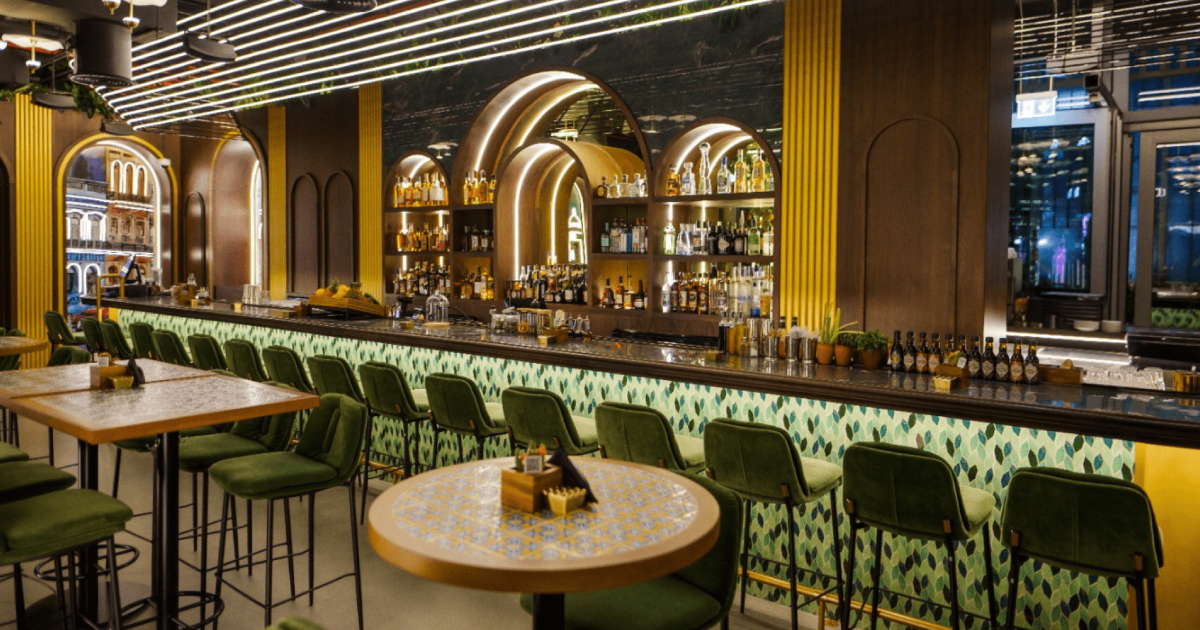
MEC HOSPITALITY
About the group: MEC Hospitality is a food and beverage group founded by Marc Chehade, operating award-winning concepts across Lebanon and the UAE. The group specializes in high-energy lifestyle dining destinations, blending strong culinary identity with vibrant atmosphere and operational excellence. MEC Hospitality develops scalable franchise models for the GCC and MENA region.
Contact: Marc Chehade, founder and CEO
Email: mec@mec-concepts.com
Franchise concepts: Esco-Bar Coctel Y Cocina
From the company:
Franchise appeal: Our franchise model is proven, award-winning and easy to scale. Esco-Bar Coctel Y Cocina won Best Mexican Restaurant in Dubai in 2025, which strengthens investor confidence. We provide clear systems, operational support, strong branding and a concept that performs well in premium lifestyle locations.
Brand recognition: Esco-Bar Coctel Y Cocina has strong recognition in Lebanon and growing awareness in the UAE. Winning Best Mexican Restaurant in Dubai at the 2025 Good Food Middle East Awards strengthened our reputation. We measure brand strength through sales performance, repeat customers, social media engagement and franchise interest.
Market potential: Saudi Arabia, Jordan and Oman show strong demand for lifestyle dining concepts like Esco-Bar Coctel Y Cocina. Young populations, growing tourism and demand for high-energy restaurant experiences make these markets attractive. We also see opportunities in North Africa and key GCC cities looking for vibrant Latin-inspired concepts.
Growth drivers: Location is key. We focus on strong lifestyle areas. Our menu is designed for high margins and strong bar sales. The concept shifts from dining to nightlife, increasing revenue per table. Marketing, events and social media drive steady customer traffic.
Expansion strategy: In the next three to five years, we aim to expand across major GCC cities and selected MENA markets. Our goal is to reach up to five operational units and establish Esco-Bar Coctel Y Cocina as a leading Latin lifestyle dining brand in the region.
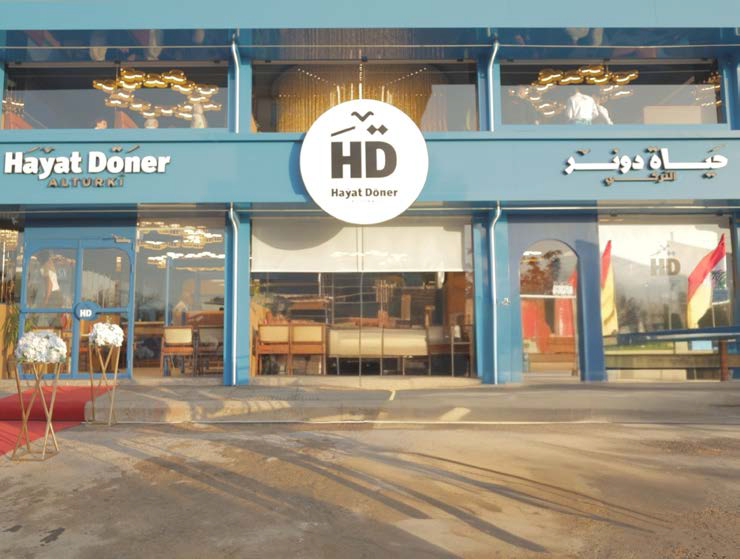
M&H HOLDING
About the group: M&H Holding manages four registered restaurant brands: Tropicana, Hayat Doner Al Turki, Shawarfandem and Comanche Diner. Operations span Lebanon and international markets. Hayat Doner Al Turki stands as the group’s flagship brand. It serves as the primary focus for worldwide expansion through a structured franchising strategy. M&H Holding aims to grow internationally by scaling Hayat Doner. Additionally, the group continues to develop innovative concepts. These deliver quality food at accessible prices.
Contact: Mohamad Trad
Email: m.trad@hayatdoner.com
Franchise concepts: Hayat Doner Al Turki
From the company:
Franchise appeal: The franchise offers a complete system. This includes operations manuals, quality management, training and ongoing support. A dedicated R&D team ensures continuous menu innovation.
It also provides full adaptation to local market needs. Consequently, franchisees receive the tools, guidance and flexibility to succeed, helping them to remain competitive in any market.
Investment and costs: The total investment required to open a franchise outlet ranges from USD 250,000 to USD 500,000. This depends on the size and location of the outlet. The investment is subject to an ongoing royalty fee of 5 percent of gross sales. Additionally, a 2 percent marketing contribution supports brand development and promotional activities.
Figures: Some outlets have achieved an excellent payback period of as little as two years. This reflects strong operational performance and market demand. On average, restaurants deliver a return on investment within approximately three years. This highlights the financial viability and scalability of the concepts.
Market potential: All MENA markets show strong demand for this concept. Döner is highly attractive and widely consumed across the region. Moreover, the concept combines traditional döner with Lebanese shawarma flavors. This twist strengthens demand, creating a familiar yet differentiated offering that resonates strongly with local tastes and consumer preferences.
Territory rights: Franchisees can receive exclusive territories, which will be defined based on the format. Options range from master franchise agreements to single-unit franchises. Territories are determined according to size and the financial capacity of potential franchisees. This ensures optimal market coverage and business potential.
For more news click here


About author

Rita Ghantous
Rita Ghantous is a hospitality aficionado and a passionate writer with over 9 years’ experience in journalism and 5 years experience in the hospitality sector. Her passion for the performance arts and writing, started early. At 10 years old she was praised for her solo performance of the Beatles song “All My Love” accompanied by a guitarist, and was approached by a French talent scout during her school play. However, her love for writing was stronger. Fresh out of school, she became a freelance journalist for Noun Magazine and was awarded the Silver Award Cup for Outstanding Poetry, by The International Library of Poetry (Washington DC). She studied Business Management and earned a Masters degree from Saint Joseph University (USJ), her thesis was published in the Proche-Orient, Études en Management book. She then pursued a career in the hospitality industry but didn’t give up writing, that is why she launched the Four Points by Sheraton Le Verdun Newsletter. Her love for the industry and journalism led her to Hospitality Services - the organizers of the HORECA trade show in Lebanon, Saudi Arabia, Kuwait and Jordan, as well as Salon Du Chocolat, Beirut Cooking Festival, Whisky Live and other regional shows. She is currently the Publications Executive of Hospitality News Middle East, Taste & Flavors and Lebanon Traveler. It is with ultimate devotion for her magazines that she demonstrates her hospitality savoir-faire.