In hospitality, experience has always been the product. However, what has changed is when that experience begins. Today, the guest journey starts long before arrival, often months in advance, during a digital evaluation phase where perception, confidence and expectation determine choice. Clearly, virtual reality (VR) has emerged as one of the most effective tools redefining this pre-visit moment. Importantly, it enables hospitality brands to communicate scale, atmosphere and intent with a level of clarity traditional marketing assets cannot achieve.
In the Middle East, where hospitality developments compete on ambition, design and experiential depth, VR is no longer experimental. Rather, it is increasingly a strategic lever, shaping decision-making and aligning brand promise with guest expectation.
Immersion as a trust mechanism
The strategic value of VR lies in its ability to reduce uncertainty. Notably, research confirms that immersive VR experiences significantly increase perceived transparency and emotional engagement. Moreover, participants exposed to VR hotel tours reported higher booking confidence and stronger trust compared to those relying on static imagery or video.
For hospitality brands, this insight is critical. Importantly, high-value travel decisions are delayed not by lack of interest but by lack of certainty. This is particularly true in the luxury and resort segments. Today, VR is able to address this gap directly by allowing guests to experience spaces rather than interpret them.
360° property tours as decision tools
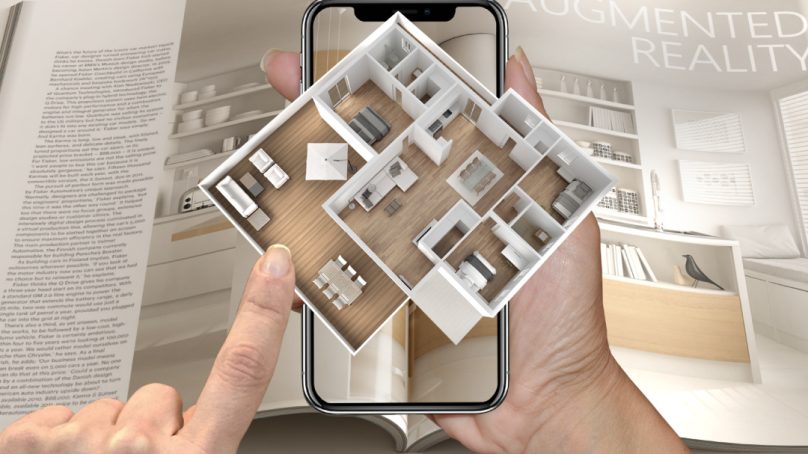
360° virtual tours have evolved beyond showcasing aesthetics. Instead, they now function as decision-support tools. Research demonstrates that immersive virtual environments significantly improve spatial understanding and memory recall. Therefore, guests better comprehend room layout, scale and flow—factors directly linked to satisfaction.
In the Middle East, where properties often feature expansive footprints and architectural complexity, this capability is particularly valuable. For example, international guests can accurately assess room orientation, proximity to amenities and privacy hierarchy.
For MICE-driven hotels, VR tours of meeting spaces also streamline the sales process. Additionally, they enable planners to evaluate configurations remotely.
Advanced booking previews reduce friction
Booking abandonment remains a persistent challenge. However, VR is increasingly proving its value at this critical conversion stage. Research shows that immersive pre-purchase visualization reduces booking anxiety and increases perceived value. Furthermore, guests who engaged with VR previews were more likely to complete reservations.
For hotels serving a mix of leisure, business and family travelers, VR also allows guests to self-select more accurately. As a result, properties stand to benefit from higher conversion rates, improved satisfaction and fewer mismatched expectations on arrival.
Immersive dining showcases
Dining has become a destination in itself, particularly in the Middle East. Tellingly, VR is increasingly used to communicate what menus alone cannot: ambiance, energy and experience. Research confirms that immersive restaurant previews significantly influence emotional expectation and willingness to reserve premium seating.
Similarly, for destination restaurants and celebrity-chef concepts, VR supports pre-opening campaigns and premium table reservations. As a result, atmosphere becomes a commercial driver.
Virtual reality as a data source
Increasingly, advanced VR platforms deliver more than immersion—they deliver insight. Research shows immersive experiences can increase engagement time by up to 30 percent. More importantly, VR analytics reveal how users interact with virtual environments.
In practice, this data informs room category positioning, upselling strategies and personalized CRM communication. Crucially, when integrated with artificial intelligence (AI), VR becomes a predictive tool, shaping not just storytelling but revenue optimization.
Why the Middle East is poised to lead
The region is well positioned for VR adoption, thanks to its ambitious hospitality developments and advanced digital infrastructure. Indeed, across the GCC, VR is increasingly being embedded into destination marketing and sales enablement, reflecting a shift from experimentation to strategic integration.
Virtual reality has moved beyond novelty. Ultimately, for hospitality leaders, the opportunity lies in integrating it strategically across marketing, sales and operations. In an industry defined by experience, VR’s true power lies in helping guests feel confident enough to choose, long before they arrive.
VR is increasingly being embedded into destination marketing and sales enablement, reflecting a shift from experimentation to strategic integration.